Memories to treasure.

‘School is out’ for the 3 of us and sadly our 3 weeks volunteering at ‘The School of Hope’ are over. None of us will forget the time we have spent with the amazing pupils, the fantastic teachers and the sometimes unnoticed, but equally brilliant, people who work behind the scenes – the nurse, the chef and his team, the administrative staff, the fundraisers – the list is endless. So many moments have touched our hearts or made us think we could learn from the way that a lot of things are done at ‘The School of Hope’. I will try to keep our special moments as succinct as possible but it may be difficult as my brain is working overtime with things I would like to share with you all.

I will start with the teachers – Karen was a classroom assistant for Sonja, Jan for Marcela and I helped Paola. All three of them are Guatemalan but they all teach English and manage to achieve so much with so few resources. From the age of 5 the children are taught to speak English from the same phonics books and videos that are used in English schools. I am now pretty spot on at singing “A A Ants on my Arm” and “When I Watch the T T Tennis Game” – those of you with young children will doubtless know what I am talking about, those of you who don’t I promise not to sing them to you when I get home. One of our main roles was to assist the teachers with producing visual teaching aids – I had to draw something for every letter of the alphabet to help children recognise letters. It was all very rudimentary – all we had was paper, felt tips and wax crayons and to protect the individual pictures I had to cover them with strips of sellotape – nothing as fancy as a laminator and if the roll of tape ran out you had to wait for the following week before you could get a new one. Because all the stationery comes from donations you have to be very careful how much you use as no-one knows when the next gifted items may arrive. We all helped our respective teachers working with the slower learners, sometimes on a one to one basis – there was a vast difference between the speed with which the children picked up English – some seemed to ‘get it’ straight away while others really struggled. I guess it’s the same the world over and if children are encouraged and helped at home with their studies they are likely to progress quicker. Unfortunately many of these children won’t even have a book or pens and paper at home and some have such an unstable home life that they don’t have anyone with the mindset to help them.
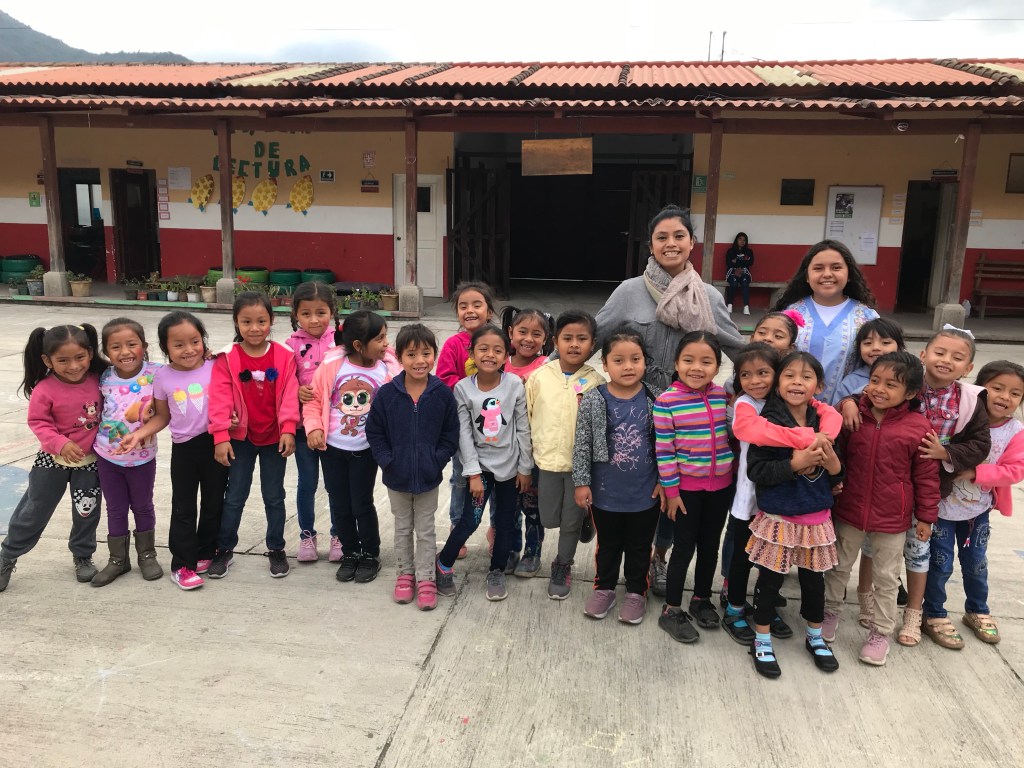
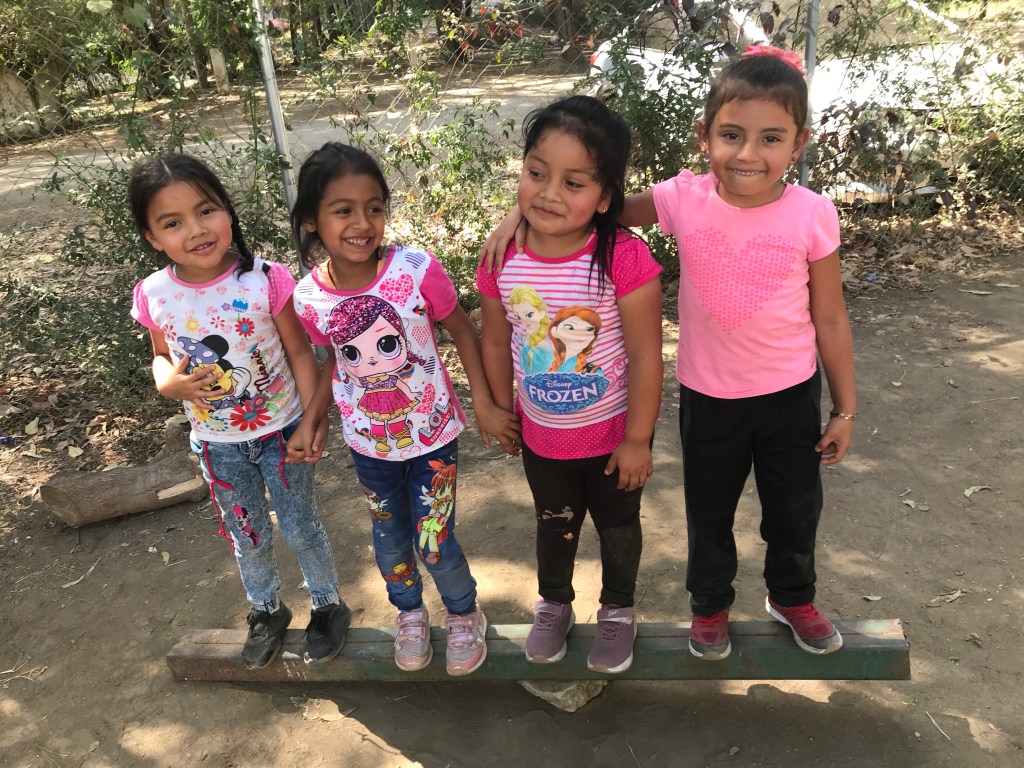
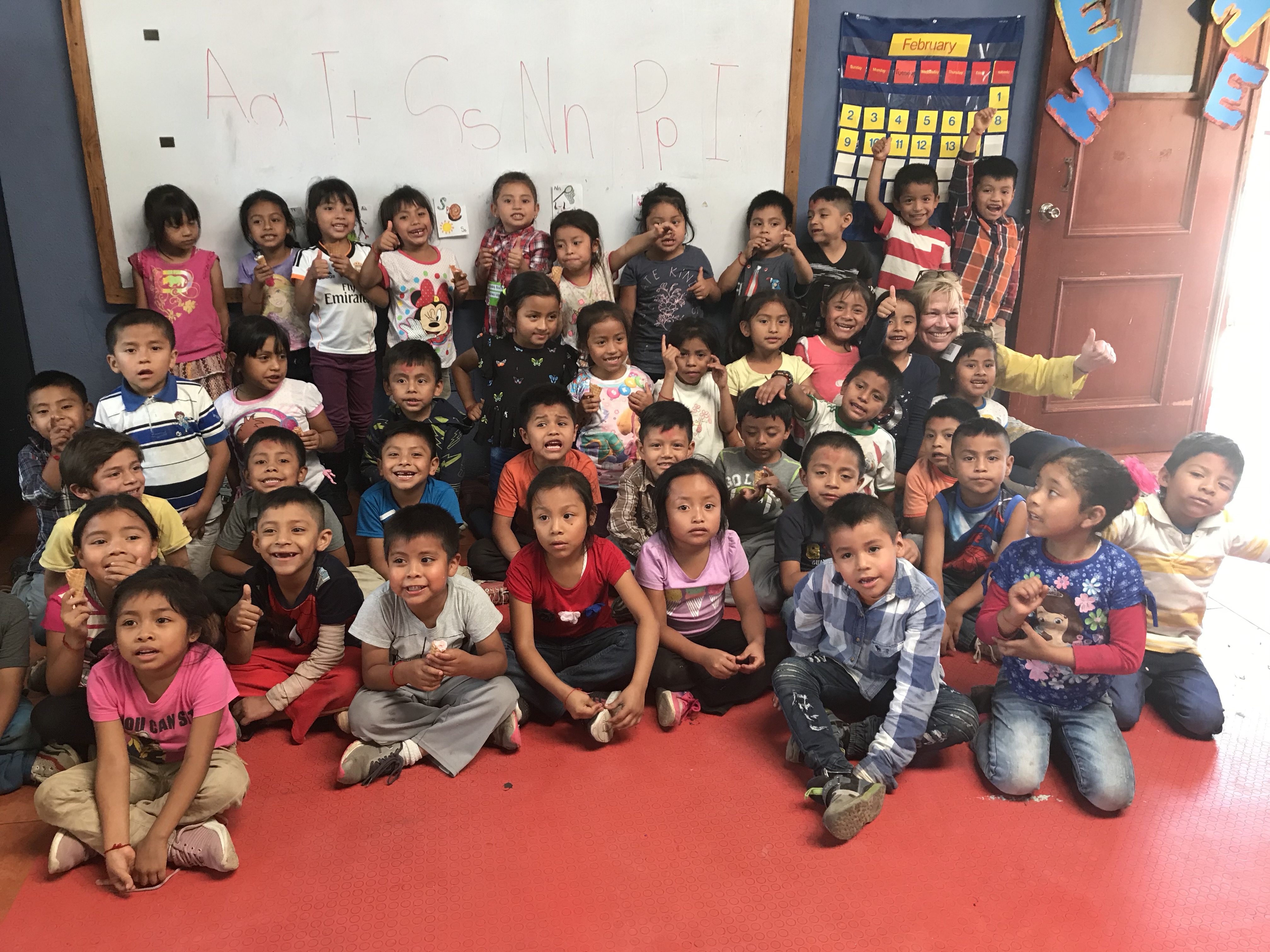
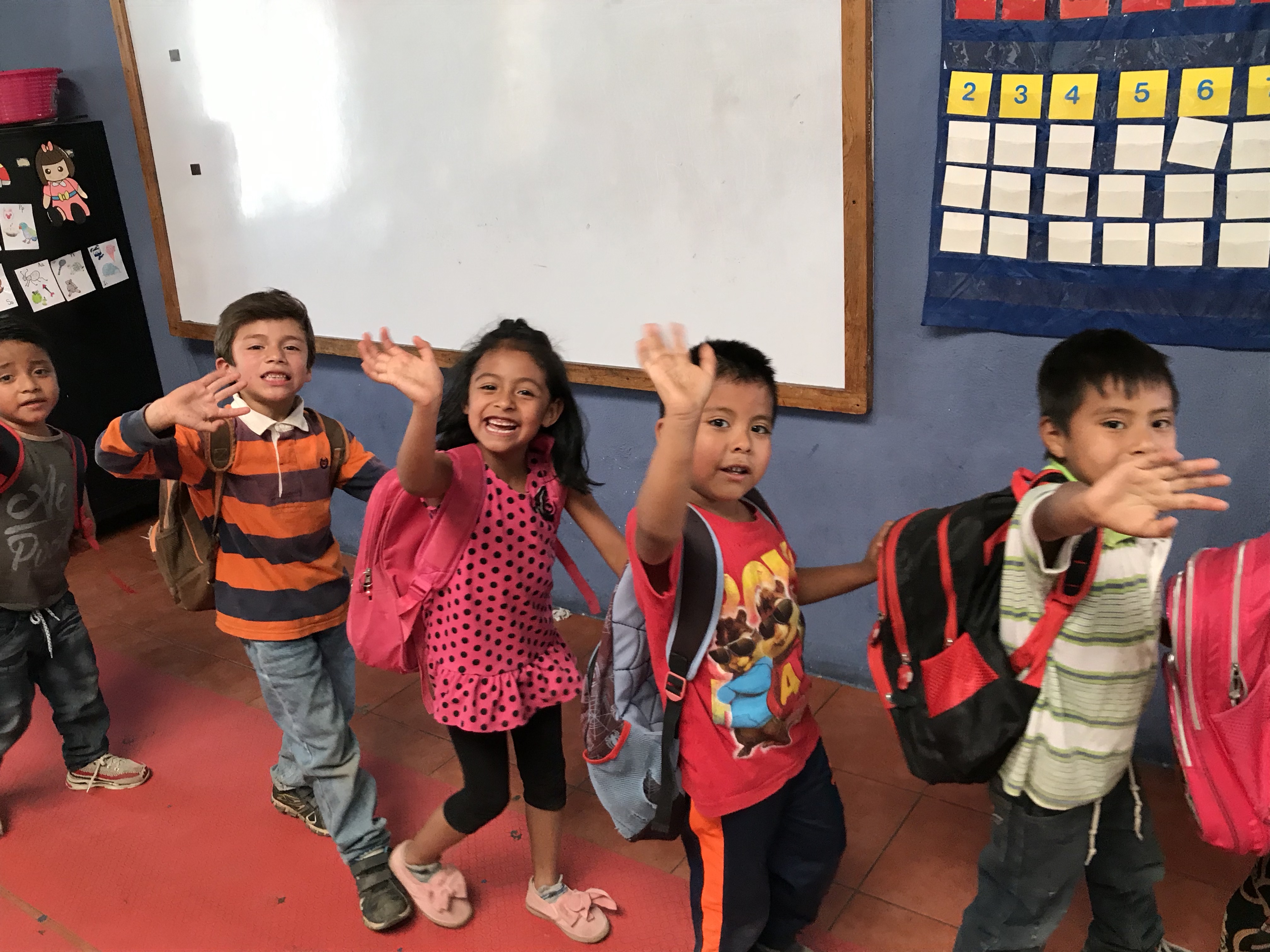
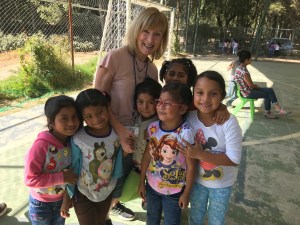
Señora Paola and all the girls in Prepa A and Prepa B

Amazingly all the pupils at the ‘School of Hope’ clean up their classrooms between lessons. As soon as the teacher calls out ” Clean Up … Everybody Clean Up” the whole class run to get the dustpan and sweeping brushes as well as cloths and disinfectant to wipe the tables. It is not seen as a chore – they like to do it and although the 5 year olds are not as effective at cleaning as the older ones the basic principles of tidying up after yourself are set at a very early age. Because there is no money for cleaners etc. some of the parents volunteer, on a rota basis, to come in and clean up the classrooms at the end of the day and also wash up after the mid-morning snack and again after lunch. Although Jan wasn’t on the rota she often managed to get her hands on a brush or a mop after the children had left so she could still partake in one of her favourite pastimes – cleaning!
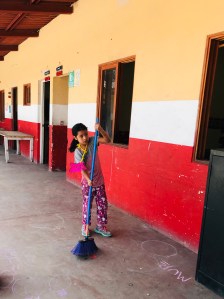
Cleaning up time

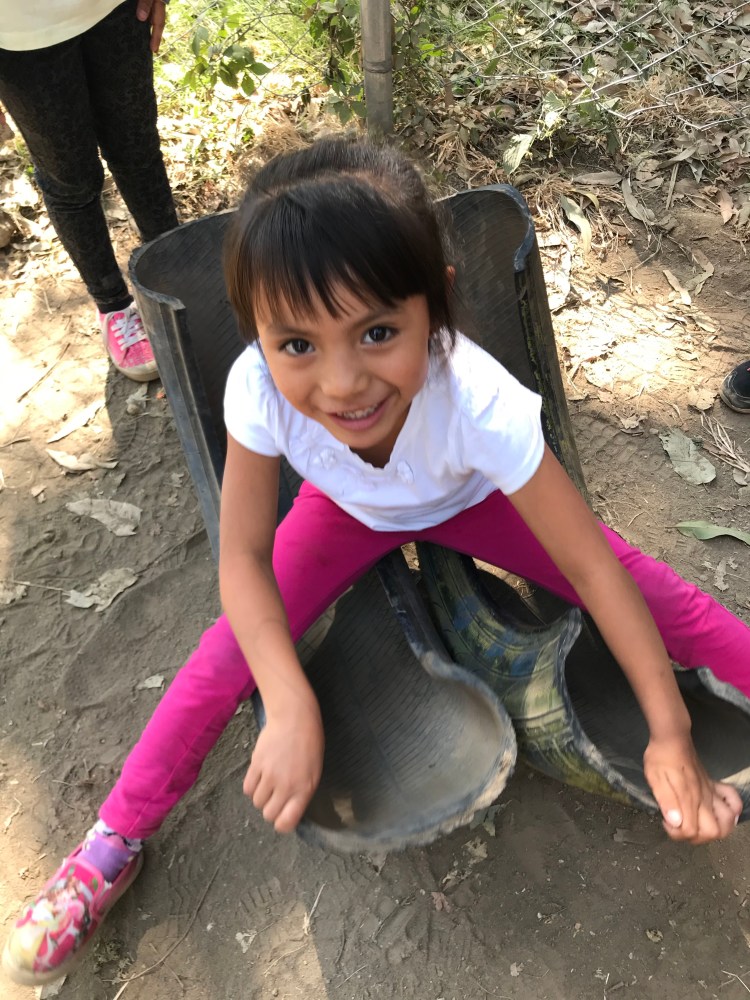
One morning the IT teachers came into my class and handed out a tablet computer to each child. It was only a 20 minute lesson but it was the first time that a lot of the children had ever seen any form of IT equipment. All they were taught was how to switch it on and off but it was magical to see their little faces light up with excitement as the screen fired up. Most of these children have few, or no, toys to amuse themselves with and they certainly don’t have mobile phones and tablets to keep them quiet but they all seem genuinely happy – they rarely squabble, they share what little they do have and they can have hours of fun with a broken hula hoop or half a car tyre.
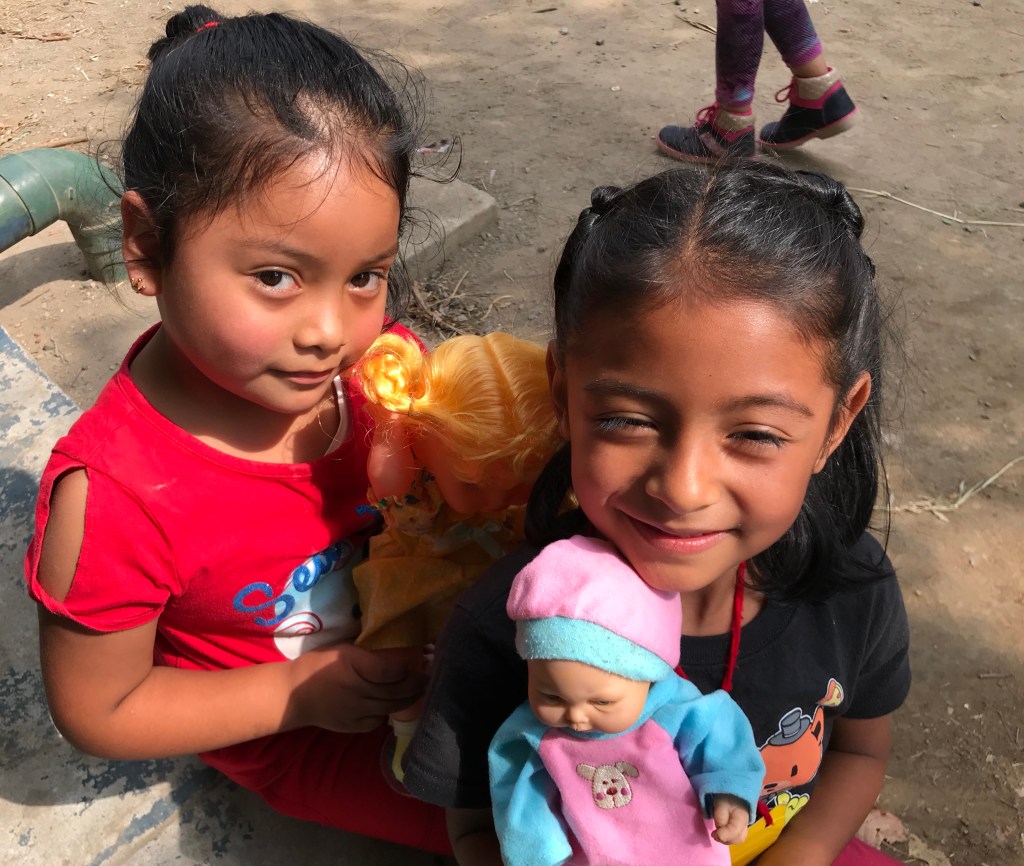
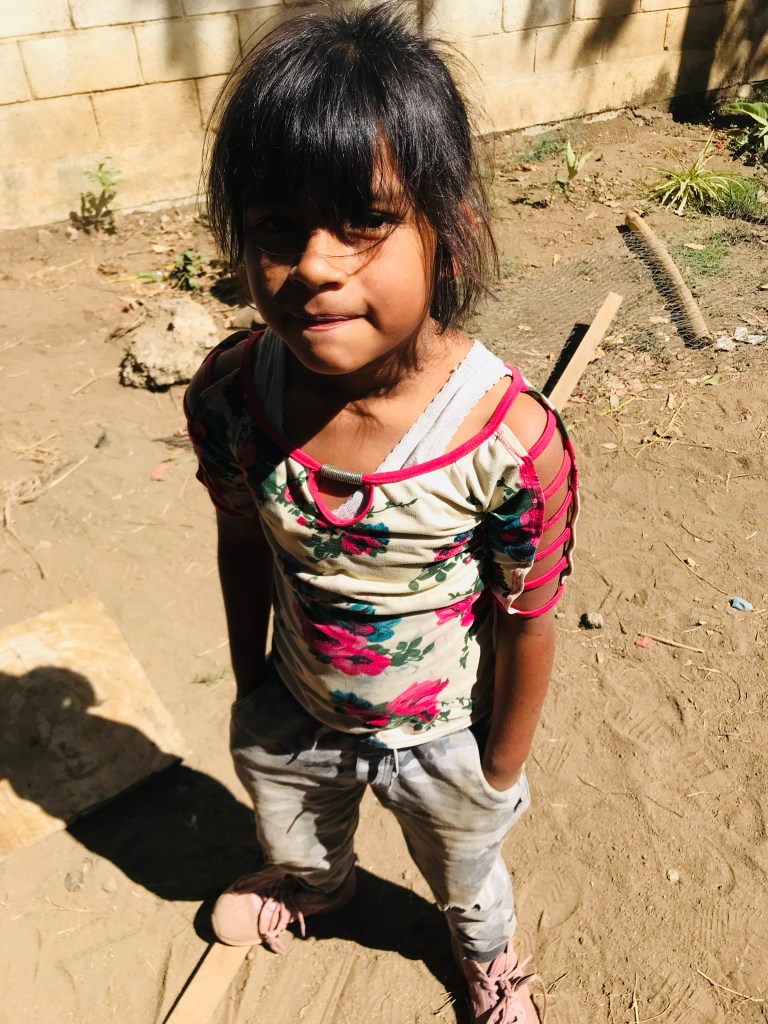
We all have so many memories that we can take away with us. Karen will always remember the boy in her class who had lost one of his work books and when she found it for him he ran across the classroom and gave her such a big hug, thanking her profusely. Jan had a little girl who could, on occasions, be slightly challenging but as soon as Jan found out about her terrible home life she could understand some of the reasons why this particular child behaved in the way she did. Every day for my lunch break I used to go to the little cafe on the coffee plantation (in which the school is situated) and my special memory is the children’s reaction when they saw me walking back into the playground. They would shout “Señora”, grab my hand, hug me and pull me to join them in what ever makeshift game they were playing. I certainly got my daily exercise running around playing ‘catch’.
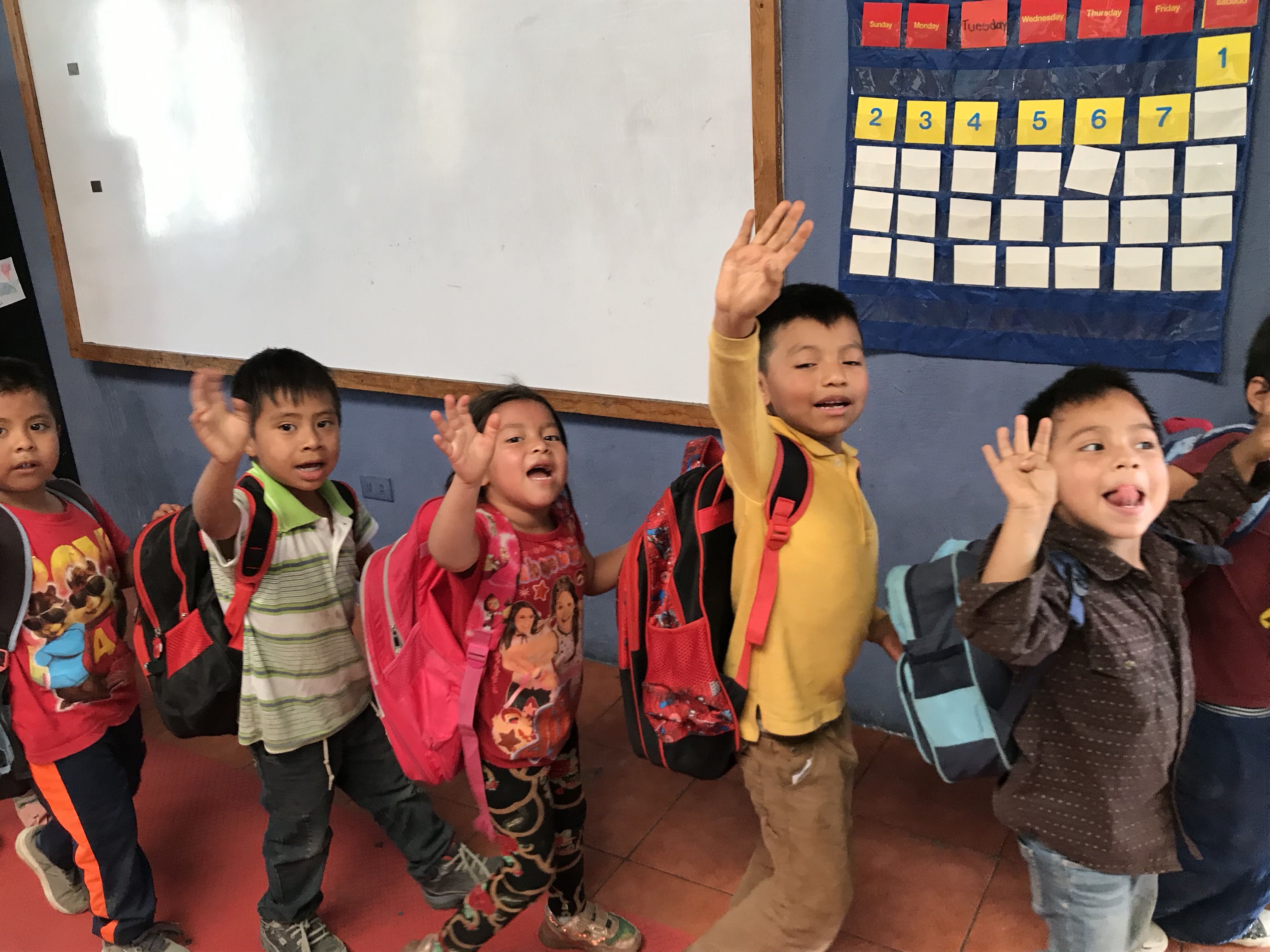
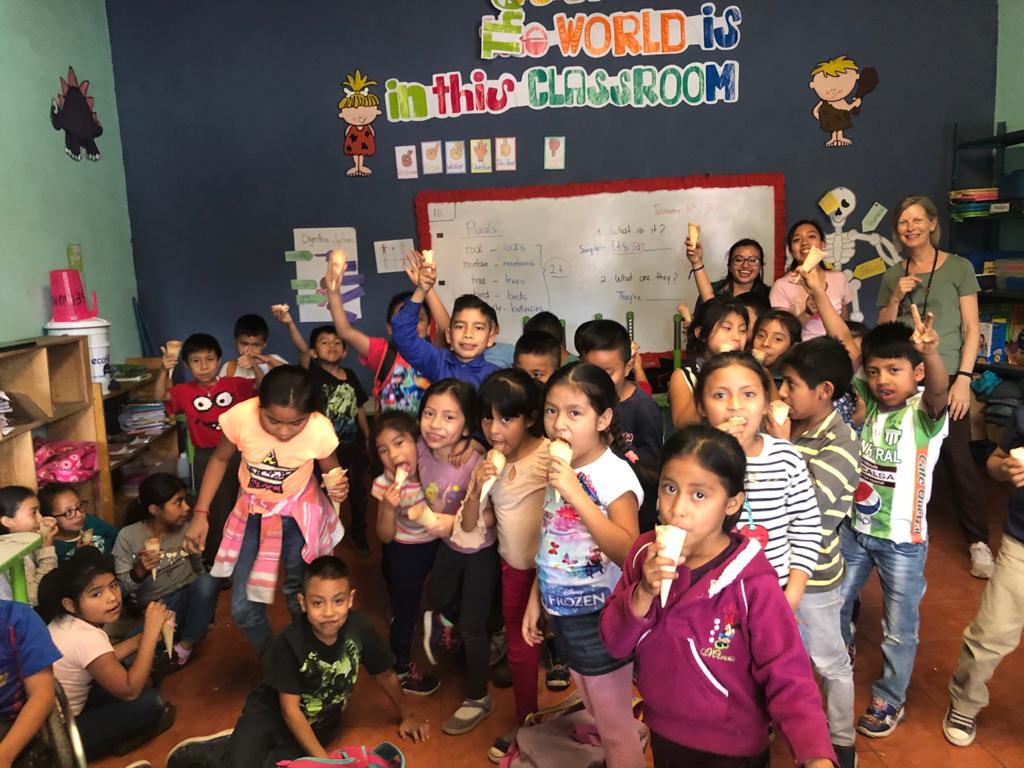
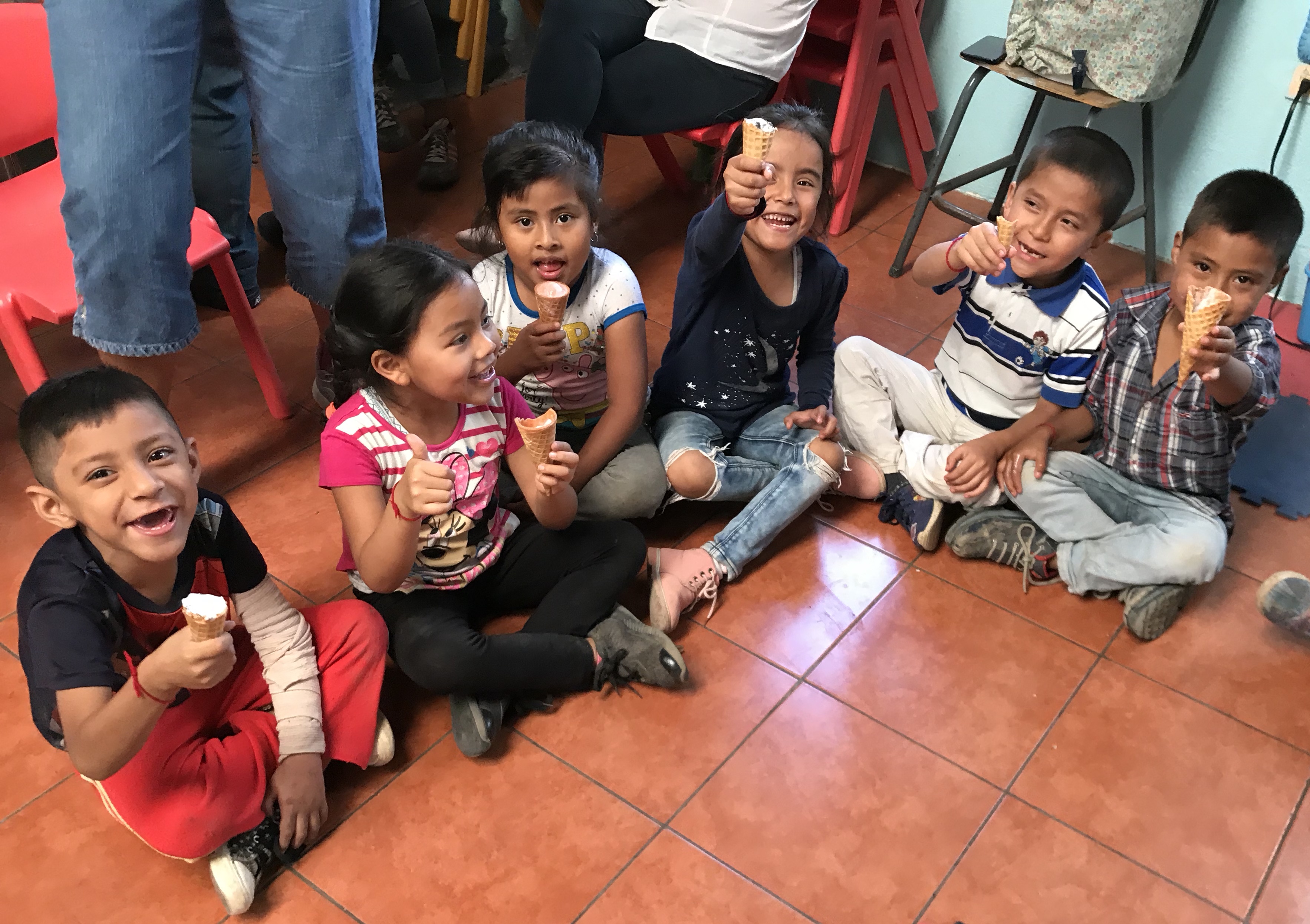
All too soon it was our last day which also happened to be Valentine’s Day. First thing in the morning Señora Paola told the class all about Valentine’s Day and what it means then asked them to give Señora Christine a big Valentine’s hug and that, for me, was the start of the tears. All of them squashed around to try and touch me and I have never been hugged by so many people at one time. Karen even got some little Valentine’s presents from her class as well as a beautiful big, hand made leaving card. The three of us bought ice cream and cones for all the children in our classes as our leaving present to them. What a treat that was for them – and again no squabbling about flavours when one got chocolate and one got strawberry, they were just so delighted to be having an ice cream. Barry and Rob had arrived in Guatemala the night before and came to the school for our last hour. Thank you Kellen for giving them a guided tour – they were both impressed with the set up and they even got a few hugs as well. Then it was lots of big, loud “thank you’s” shouted from all the classes, loads more hugs, more tears and finally a steady stream of waves goodbye.
It is a week since we finished volunteering and we have been relaxing in an amazing house on the shores of Lake Atitlan about 2 hours from Antigua. Another place to add to your bucket list and easy to get to if you are volunteering in Jocotenango. While we have been chilling out in such beautiful surroundings we have had time to reflect on our time at ‘The School of Hope’. We all agree it has been a fantastic experience and for me, and I am sure Karen and Jan feel the same, also a very humbling experience. Those children have melted our hearts with their resilience, their loving nature, their optimism and their ability to laugh and smile in a pretty tough environment. If you are interested in sampling some of that magic you can read more about volunteering by following this link https://www.eftc.org.uk/en/get-involved/volunteer-in-guatemala – you won’t regret it, we most certainly haven’t and we will hopefully be back again in a couple of years, that is surely proof enough of how special “The School of Hope” is.
Promoting healthy lifestyles to combat disease and malnutrition.

In Jocotenengo, and throughout much of Guatemala, parasites and malnutrition bring huge health problems. Because of the high levels of poverty, many people have little or no access to quality nutrition plus large sections of the community have very limited education and thus lack a basic knowledge of simple hygiene ‘do’s and don’ts’. Both these issues subsequently lead to higher incidences of disease. Whilst we have been at ‘The School of Hope’ we have been so impressed with the excellent strides they are taking to combat these problems through some amazing, but often very simple, initiatives.
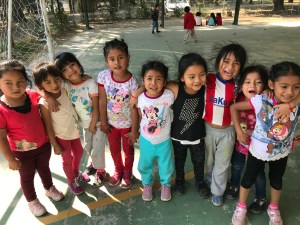
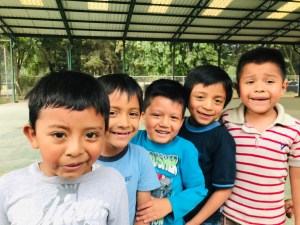
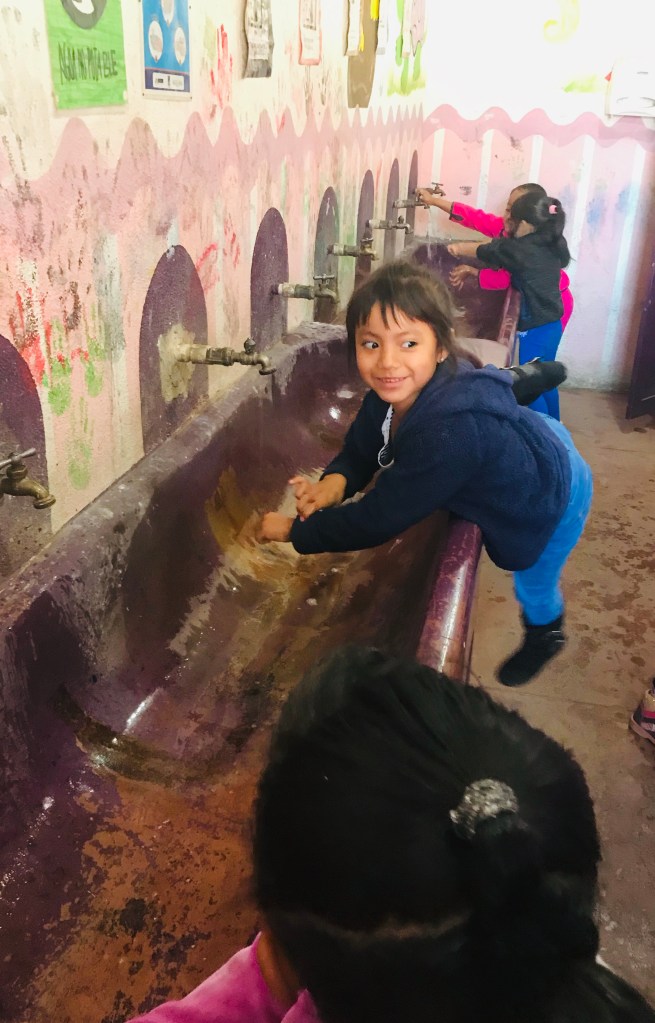
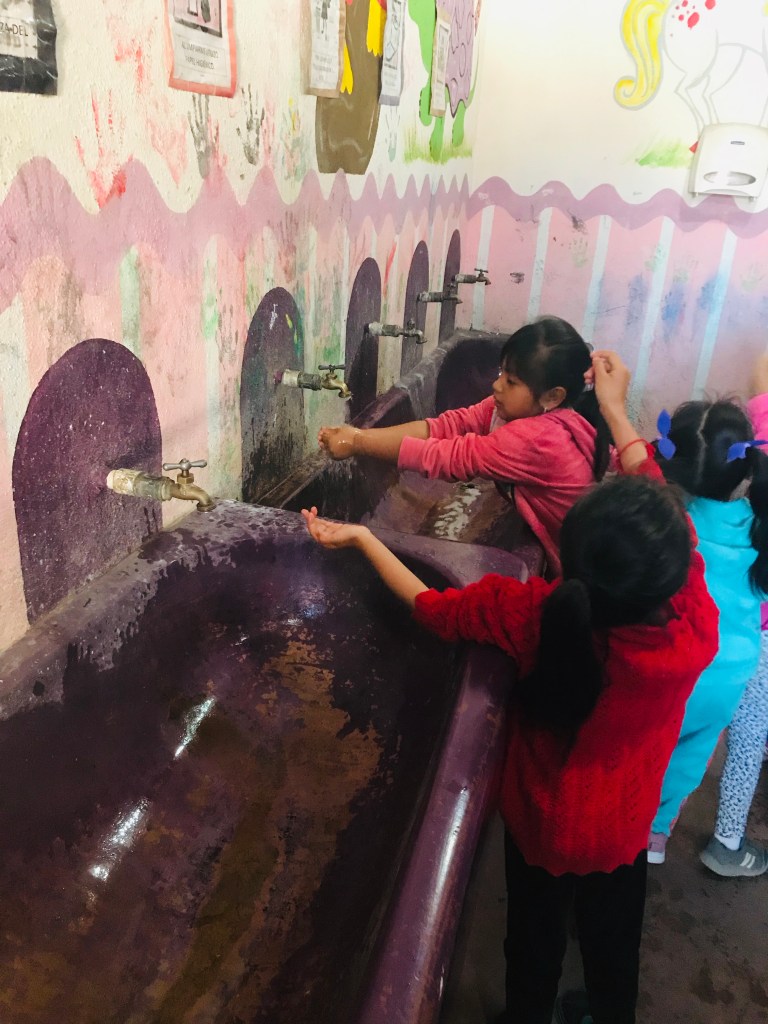
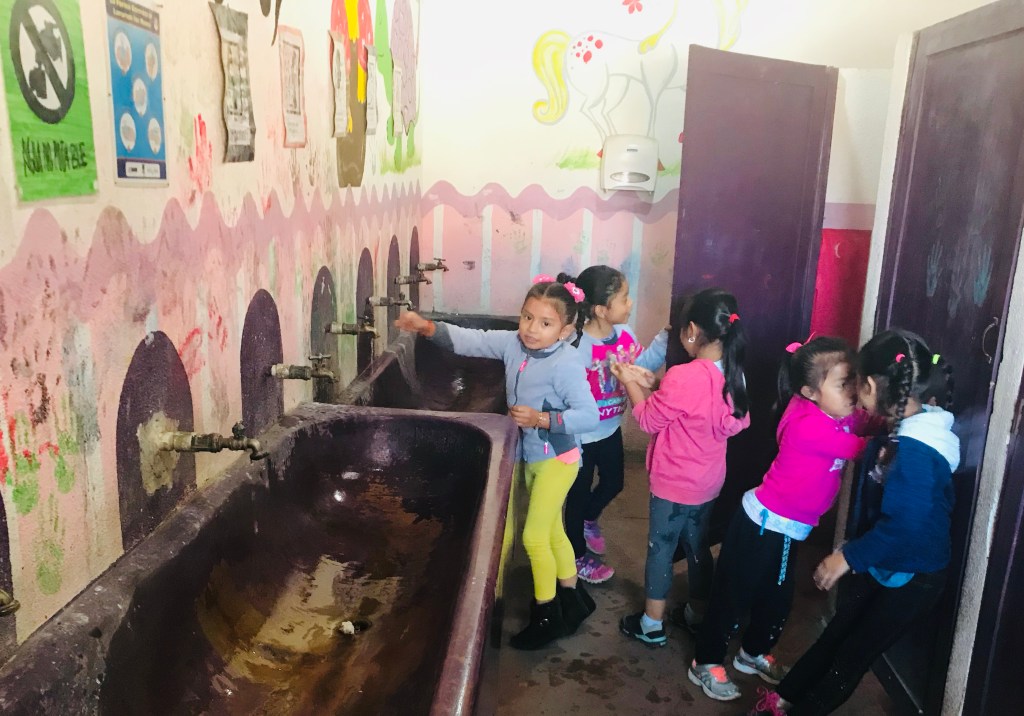
I shall start with hand washing simply because, every day, one of my responsibilities is to make sure every child in ‘Prepa’ washes his or her hands after they have been to the toilet. Most of us are fortunate enough to understand, from a very young age, that ‘hand hygiene’ is an important lifetime habit for staying healthy but many of these young people are not made aware of this until they start school and some will probably not even have the facilities to wash their hands at home. Twice a day the 4 to 5 year olds line up outside the toilets, in an orderly fashion, to be given (by me) a strip of toilet paper – remember even loo paper has to be bought with donations so none of us are allowed to go crazy! One of of my biggest achievements is that every girl in ‘Prepa’ can now say “paper please” as I tear them off a piece of paper from a large industrial sized roll. The smiles on their faces when I say “good girl” because they have said these 2 words correctly are priceless. They then know that before they can come back to class they have to get a ‘squidge’ of bactericidal soap, wash their hands and then line up in the school yard where we wave our hands to let them air dry in the hot sun. Obviously as the children get older the paper and soap scenario changes slightly and Jan and Karen’s classes don’t have such a disciplined routine to follow but hopefully the basic steps they learnt when they started school will be with them for the rest of their lives.

Cleaning teeth is another part of a normal daily routine that we all take for granted but many of ‘The School of Hope’ students do not have access to clean running water at home nor do they own a toothbrush or toothpaste. So, at school everyone has a toothbrush (thanks to hundreds of donations including many from a lot of you reading this) and teeth cleaning is encouraged as a regular activity.

Approximately 95% of the water in Guatemala is unsafe to drink.  Children, especially those in rural areas, often get sick from drinking unclean water.  When they are sick, they are less likely to perform well in school, attendance suffers, and subsequently they miss out on all the available learning opportunities. Parasites are usually transferred through contaminated water, making them dangerous because they can induce malnutrition by consuming the body’s nutrients.  At ‘The School of Hope’ pupils are regularly screened by the school nurse for signs of parasites and yesterday an external organisation came in and administered single-dose medications to certain pupils. These tablets can fully treat the relevant parasitic infections and provide yet another example of going the ‘extra mile’ to make the children happy and healthy.

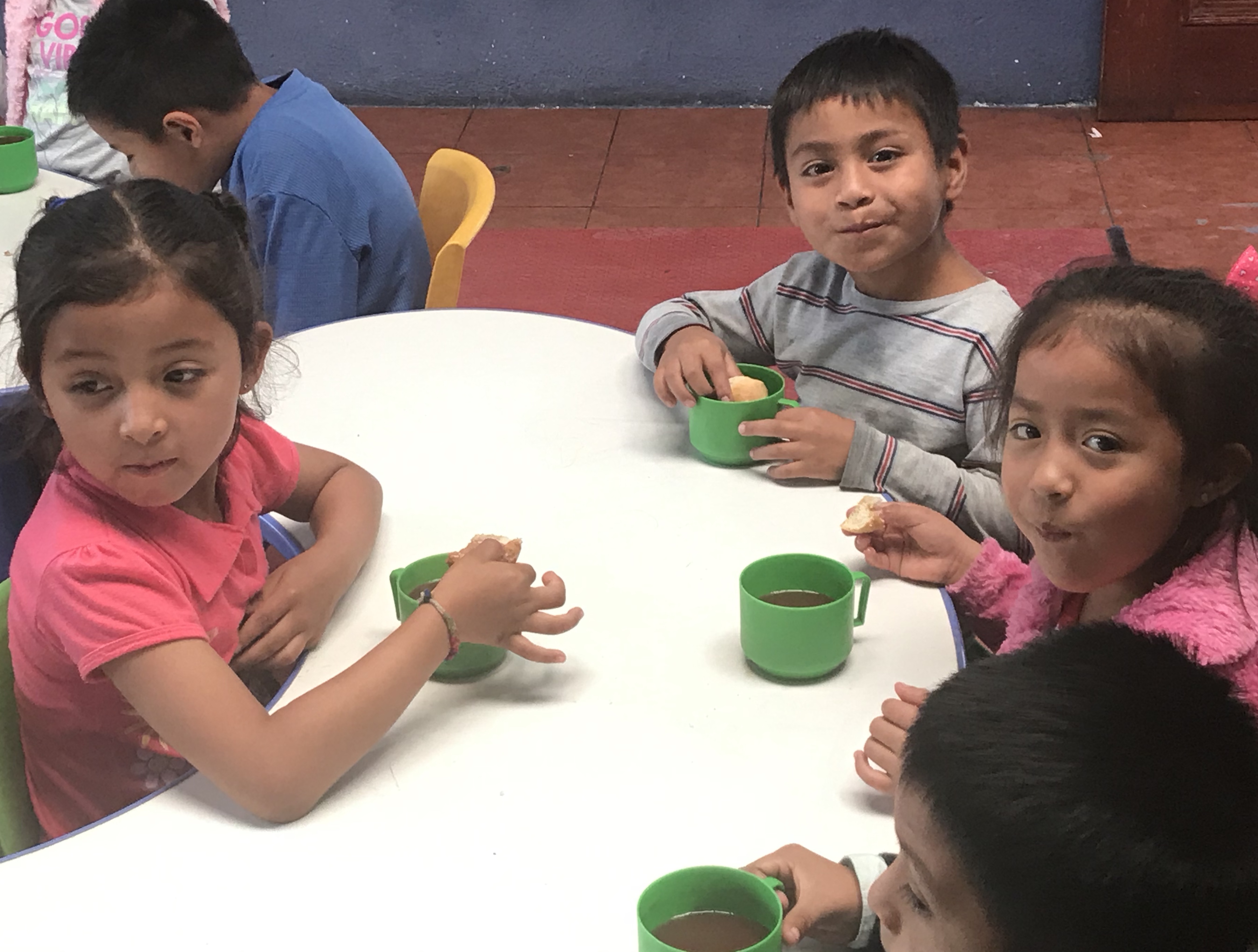
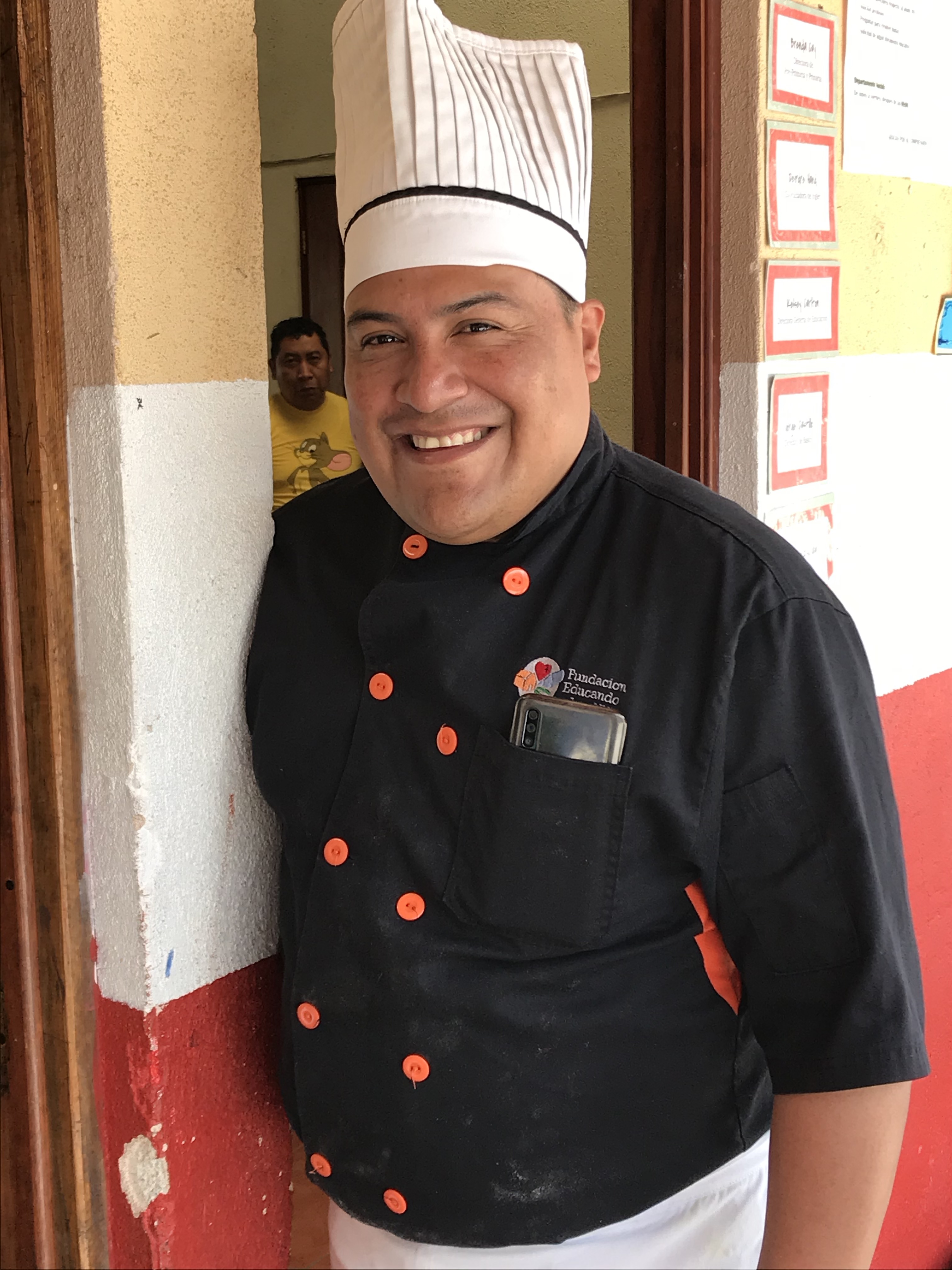
Probably one of the best things of all about this very special school is the nutrition programme. Each day every single child in school receives a healthy mid morning snack and a fruit and vitamin-packed drink and then at lunch time everyone gets a nutritionally balanced meal and another healthy drink. The food is carefully prepared by a qualified chef and his team in an immaculately kept kitchen. There are no pre-prepared products at all – the produce is all local and fresh – music to my ears! Karen can vouch for the fact that all the meals are delicious as she never misses out on eating with the kids. Jan’s favourite job of all is handing out tortillas to accompany the main meal. I expect the chef will be relieved when she leaves as Jan often gives an extra 1 (or even 2) tortillas to those who realise she is a soft touch where a smile or a cheeky grin is involved.

Those of you who know me well will recall that many years ago I worked in school catering and to try and promote healthy eating I even illustrated a small pamphlet to give to every primary pupil in Sheffield called ‘The A to Z of Healthy Eating in School’. Oh how I wish I had been dealing with these children from Jocotenango way back then… my job would have been 100% easier. These young people do not get a choice of meal, drink or snack and they are not allowed to leave anything. There are no tears or tantrums about eating food they ‘supposedly’ don’t like and, every single student, throughout the school, eats and enjoys everything on their plate from the vegetables, to the protein to the pasta/rice to the 1/2/3 tortillas (depending on how much they smile at Jan). To me this is so refreshing because I was used to dealing with hoards of whinging pupils/parents continually saying I/my child cannot eat one thing or another. We could learn so much from the nutrition programme at ‘The School of Hope’ where there is thankfully not a chicken nugget or a frozen pizza in sight. Apart from the fact that a nutritionally balanced diet means students are better able to concentrate on their studies the most important thing that this programme provides is a snack and a meal that is often the only proper food that some of the children will get all day.

The nutrition programme is completely funded by sponsorship. It costs £13 a month to provide a student with two nutritious meals a day leaving them ready and energised to learn. If you are interested in a nutrition or other type of sponsorship – please follow this link. https://www.eftc.org.uk/en/sponsor

If you don’t feel you can commit to a full sponsorship why not ‘Donate Your Dinner To The School of Hope’. In 2020, the nutrition budget is underfunded by £2,224. So, between Wednesday 19th February and Thursday 19 March EFTC are asking us to #donateyourdinner to fund the shortfall. Whether you are tucking into a sandwich, eating street food in Vietnam or having a slap up Michelin Star meal , take a photo and #donateyourdinner by visiting https://justgiving.com/campaign/donateyourdinnerjustgiving/campaign/donateyourdinner

So, within the blink of an eye, tomorrow is here and it is our last day at school – there are bound to be hugs, tears and more hugs. There is still a lot more to write about our time at ‘The School of Hope’ but as Rob, Barry and Letty fly out to join us this weekend you may have to wait until I am laid out on a beach in Costa Rica before you get my final instalment. For now we are all off to pack our tissues in preparation for the end of our amazing, life changing adventure.

Living it up in Antigua, Guatemala

I used to think geography was one of my better subjects but, I am ashamed to say, before planning our trip to Guatemala the only Antigua I had heard of was an island in the Caribbean. However I now know there is another Antigua – a beautiful Guatemalan city where we are fortunate enough to be living while we are volunteering at “The School of Hope”, Jocotenango. We are so lucky to be renting a house in such a vibrant and upbeat city which is in stark contrast to the many areas of extreme poverty, just a few miles away, where we are working and where the majority of our students live.

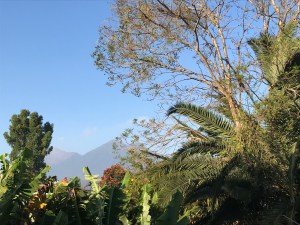
View from our balcony

Antigua is often referred to as the ‘jewel in Central America’s crown’ and also its’ prettiest city. It is most certainly the most visited city in Central America but this shouldn’t put people off – it doesn’t seem overrun with tourists and back packers and retains a truly Guatemalan vibe.

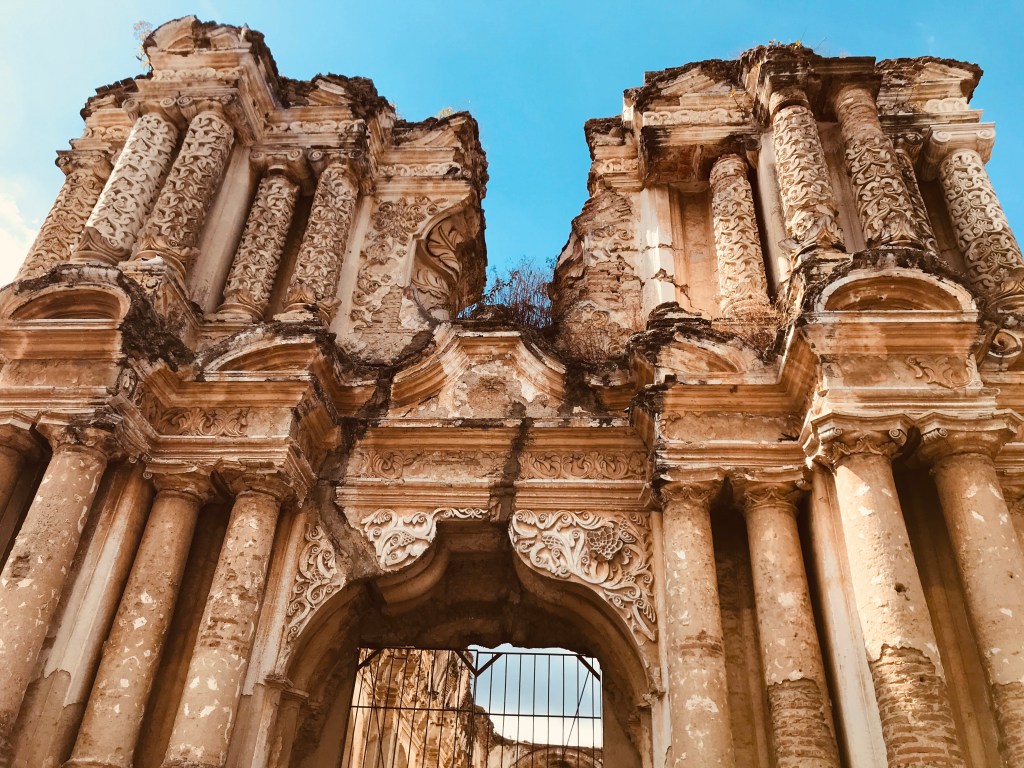
The city has a rich history – it was the old capital of Guatemala (before Guatemala City) and was once the most important seat of Spanish colonial government between Mexico City and Lima, Peru. It was granted UNESCO World Heritage status in 1979, and is a cultural mecca for architecture lovers, foodies, coffee connoisseurs and anyone after a good time – so it is perfect for the 3 of us.

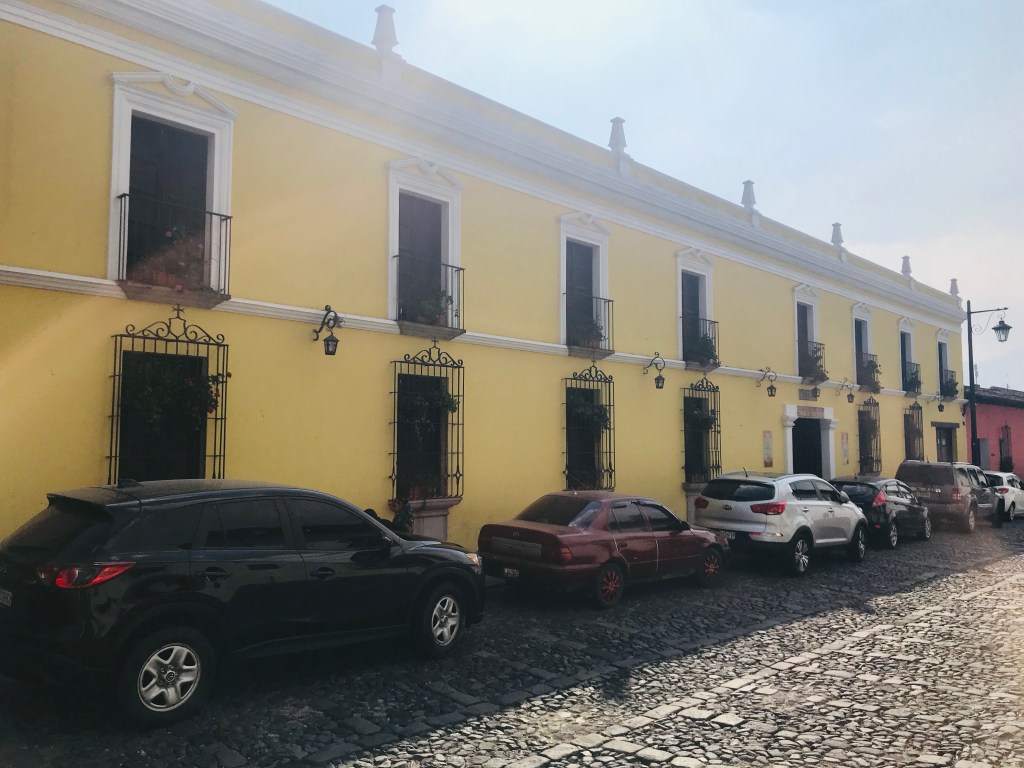
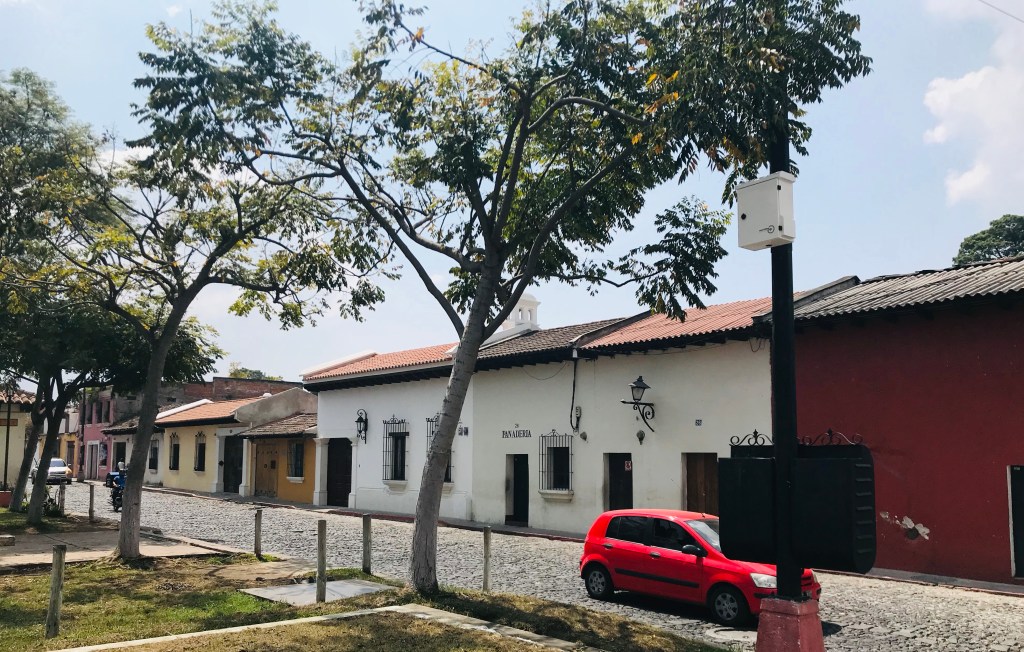
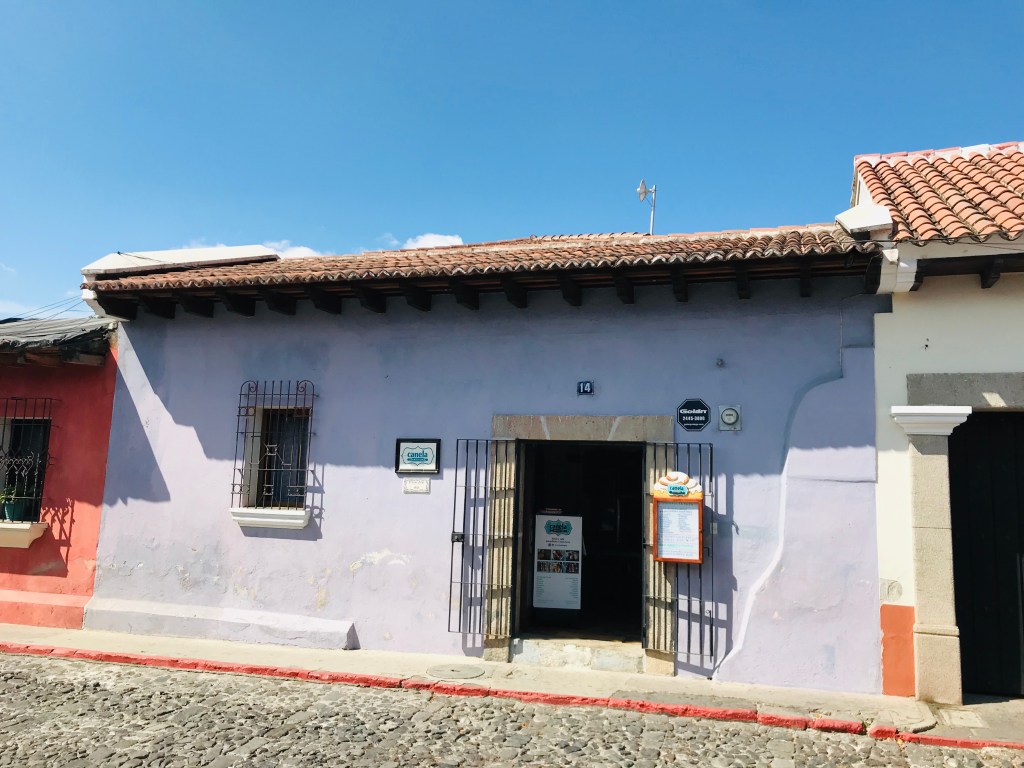
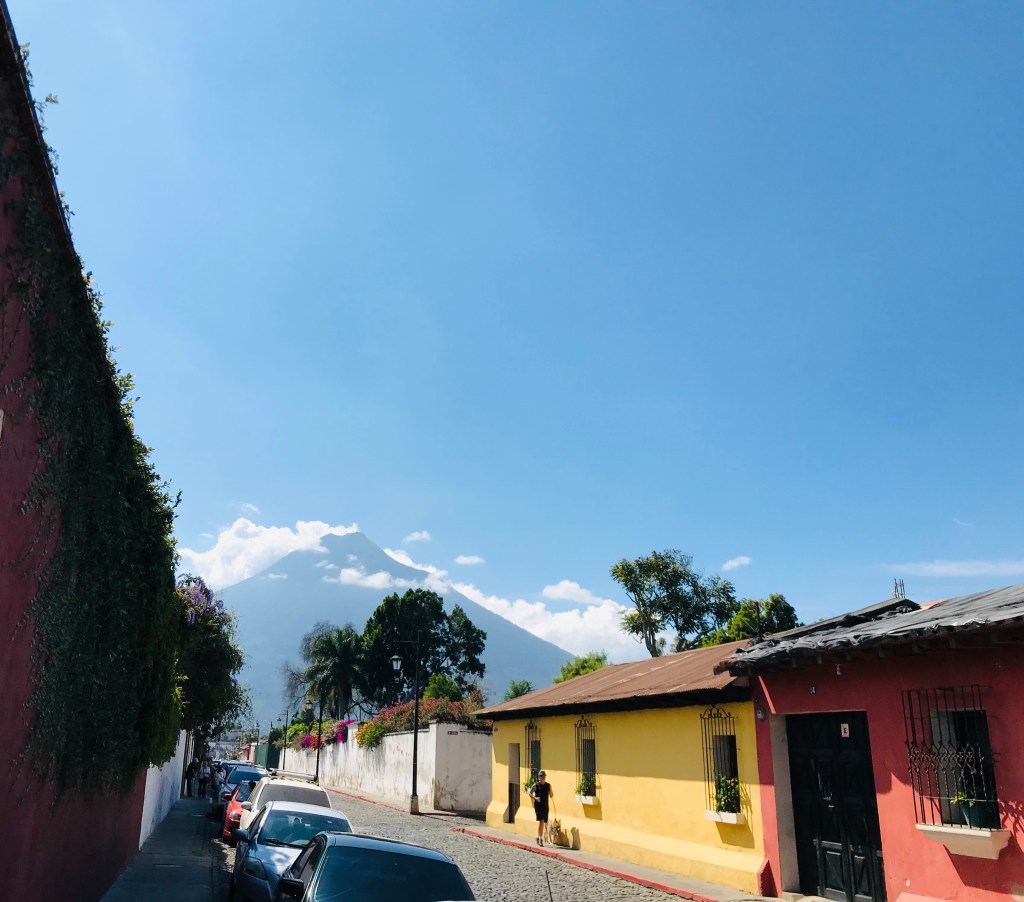
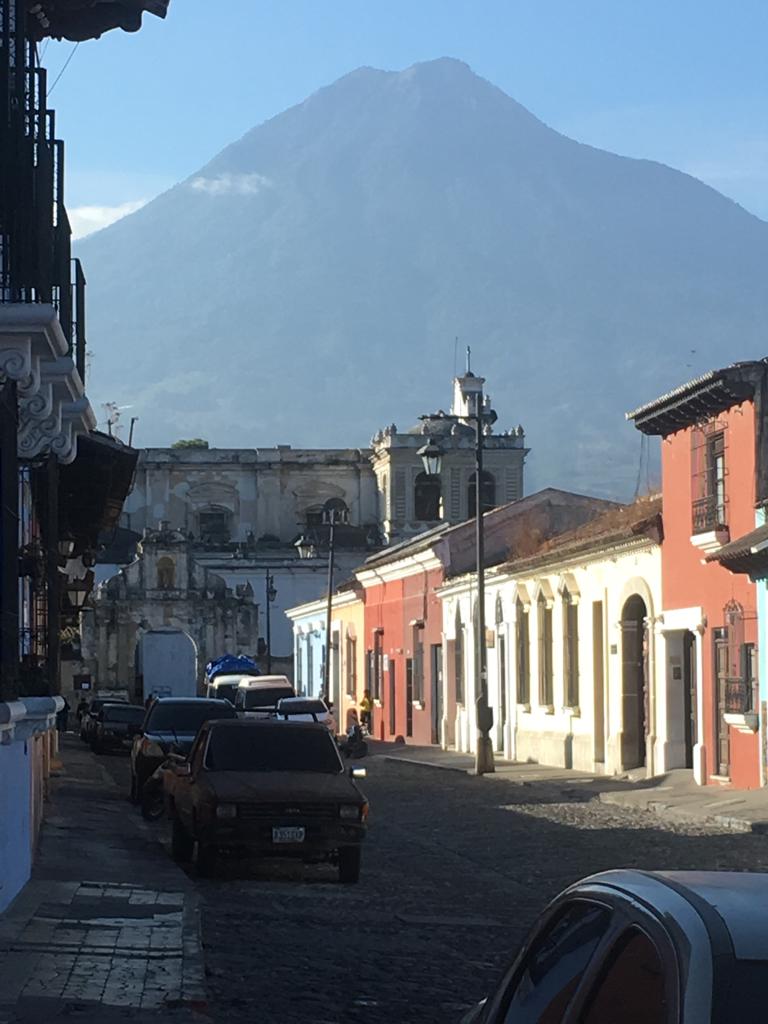
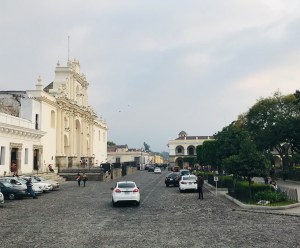
The cobbled streets are lined with brightly coloured colonial buildings, there is a busy central park, 16th-century ruins appear to pop up from nowhere and you are always within sight of one of the three majestic volcanoes that surround Antigua.

The city itself is very easy to navigate and works on a ‘grid’ system. Surprisingly for me I have taken a back seat on the navigating front – I am usually the one with a ‘Rough Guide’ in hand trying to find the coolest bars/restaurants/hotels/shops/sites and making sure we don’t get lost. However Jan and Karen have taken the helm and familiarised themselves very quickly with the Avenida’s (running North to South) and Calle’s (running East to West) so for once in my life, I am a few paces behind, letting them lead the way and, I should point out, we haven’t really been lost yet. Antigua is a small city so you can easily cover it on foot – providing you are not wearing flip flops or heels (tricky for me I know).

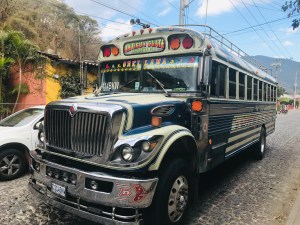
If you don’t want to walk there are several other options for getting about the city and the surrounding areas. There are plenty of Uber’s and they are so cheap. We have been splashing out and getting one to school each morning and it costs less than 50 pence each for a 3 mile journey. Tuk Tuk’s are another form of transport and although they look a little more ramshackle than those I have used in South East Asia they are a quick, cheap, albeit bumpy way of getting from A to B. Then there are the ‘Chicken Buses’ which are retired yellow school buses from the United States. On arrival in Guatemala these buses are repaired, in a somewhat rudimentary fashion, and the yellow paint is replaced by crazy, colourful designs. They barely stop for you to get on and once aboard you are almost flung into your seat as the bus careers around a corner billowing black smoke. The term ‘Chicken Bus’ derives from the fact that passengers would often transport live animals on them however we have yet to see any form of poultry on board. This is by far the cheapest mode of transport and our journey home from school costs the equivalent of 10 pence.

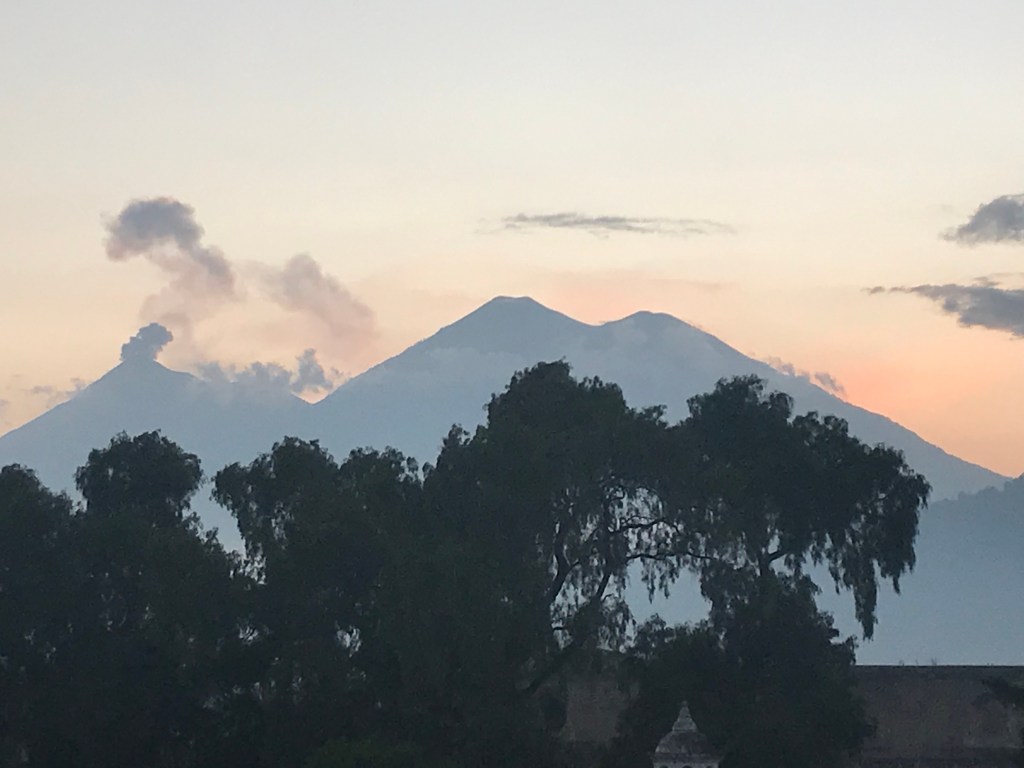
As well as being famous for its colonial ambiance, Antigua is famed for the three volcanoes in its vicinity. In fact, we are lucky enough to see one of them from our balcony. These volcanoes Fuego, Acatenango and Agua provide Antigua with a spectacular panorama – particularly the Fuego volcano which is constantly emitting a spiral of white smoke. There is another volcano – Pacaya – which is over an hours drive away from the city and Karen and Jan plan to climb that next weekend once the others arrive. Unfortunately my dodgy knees won’t make it and I will no doubt be jealous when they come back with tales of camping under the stars and toasting marshmallows over the lava.

Antigua is full of enticing local shopping, from high end Guatemalan designer stores to local artists crafts shops; to the Mercado de Artesanías, brimming with colourful textiles, woven purses/handbags, masks and jewellery; or Mercado de Carmen, which sits next to the ruins of an old church and sells pottery, blankets and jade at excellent value, particularly if you are good at bartering. Even those of us who cannot be classed as shopaholics have been inspired to make a couple of purchases. There is also the Mercado, a fruit, vegetable, fish, meat and everything-you-could-possibly-need market. It is a veritable maze partly indoors, partly outdoors and we always seem to get lost in the winding walkways, disagreeing on which way to turn next.

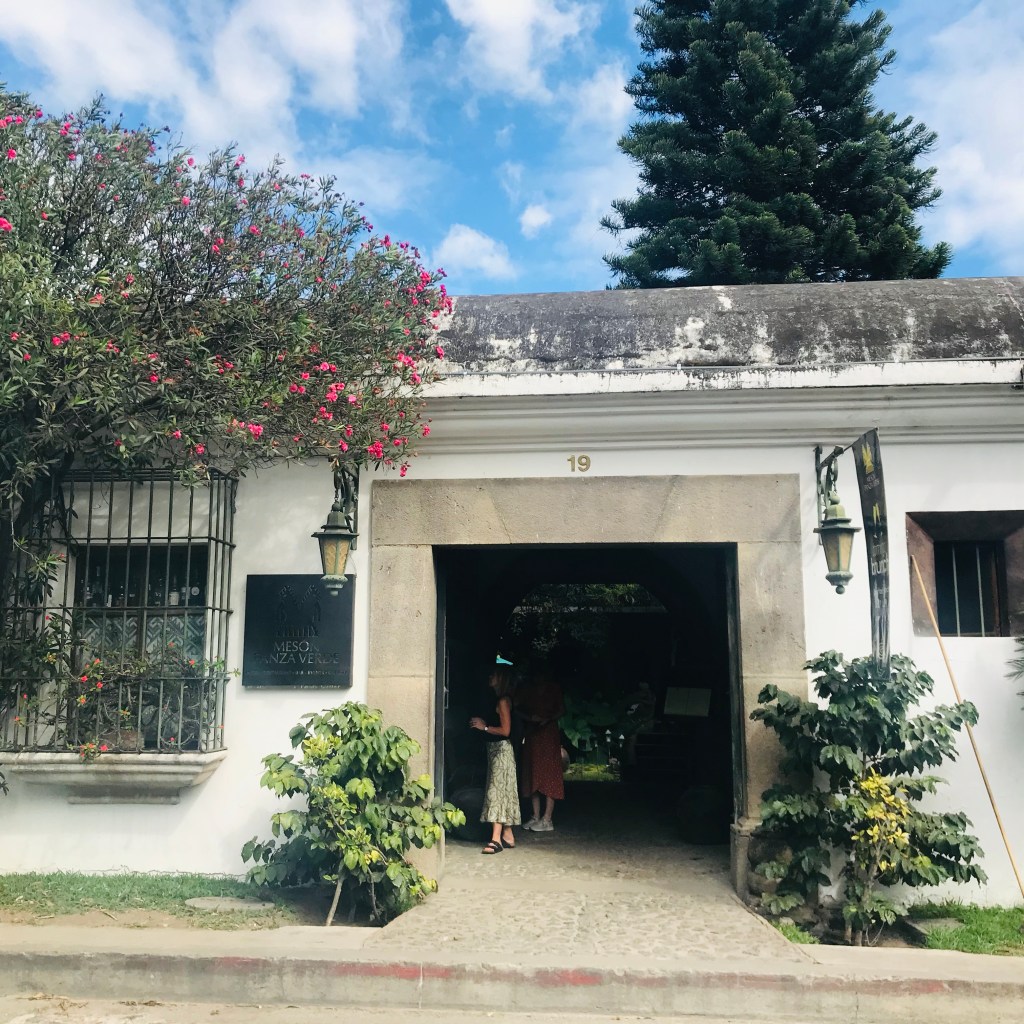
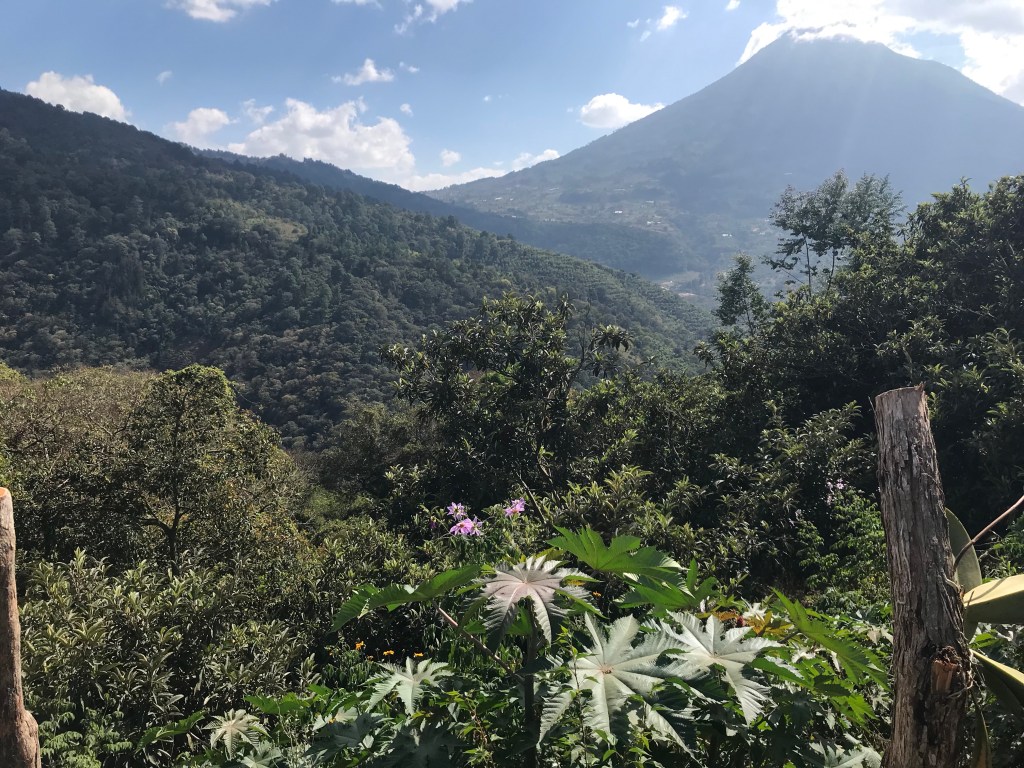
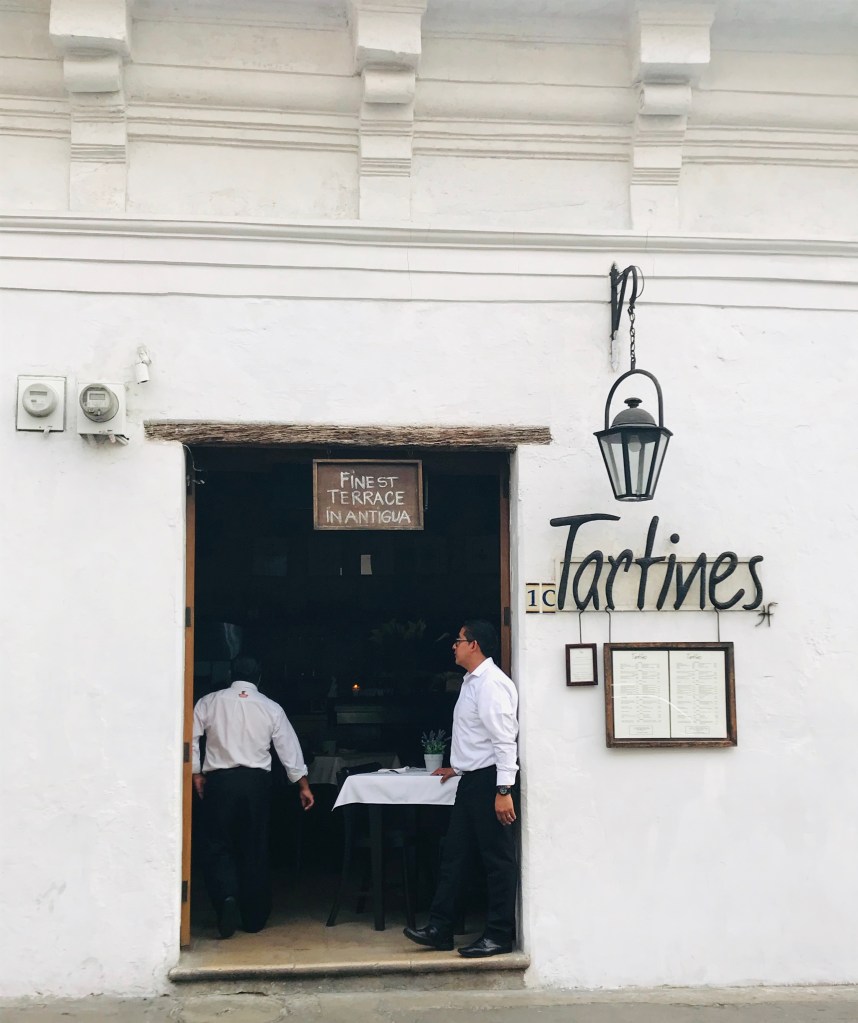
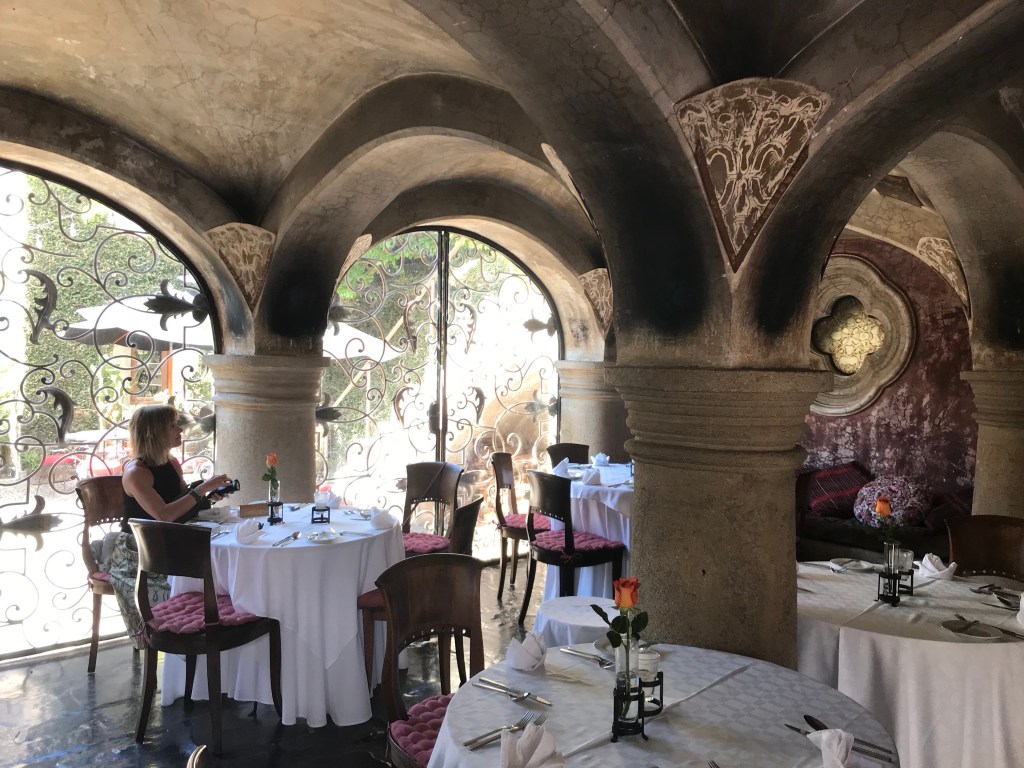
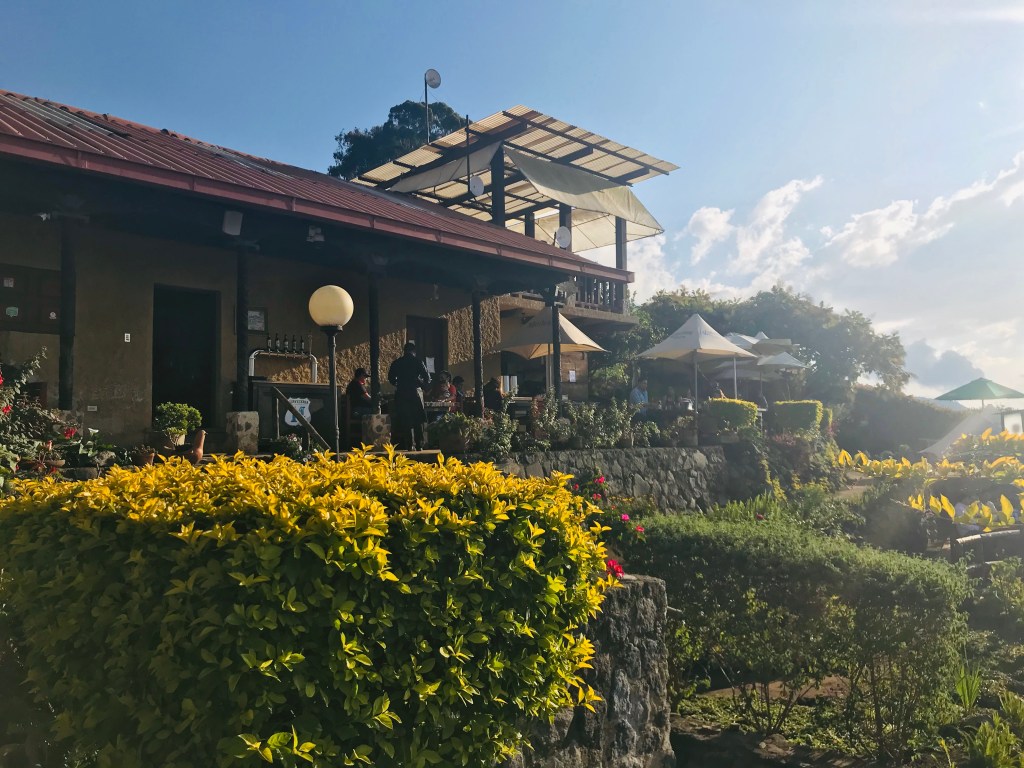
The thing that has probably surprised us the most about Antigua is the amount of incredible bars and restaurants. We have eaten a lot of delicious Guatemalan food but also indulged in Mexican, Italian and French meals – all home cooked, all in beautiful surroundings. Last weekend we splashed out and had Sunday brunch and cocktails in Meson Panza Verde a luxury hotel in an old colonial mansion. There are several restaurants set in the hills above Antigua most of which provide a shuttle service in an air conditioned mini bus. Last weekend we went to Cerro San Cristobal – an organic farm and restaurant located in San Cristobal El Alto with stunning views of the volcanoes and down to Antigua. Apart from the ubiquitous Burger King, Domino’s and Subway there are thankfully no other chain restaurants to be found and even these 3 ever present outlets are designed in such a way that they blend in with the local architecture – no ‘in your face’ neon lighting or advertising boards.

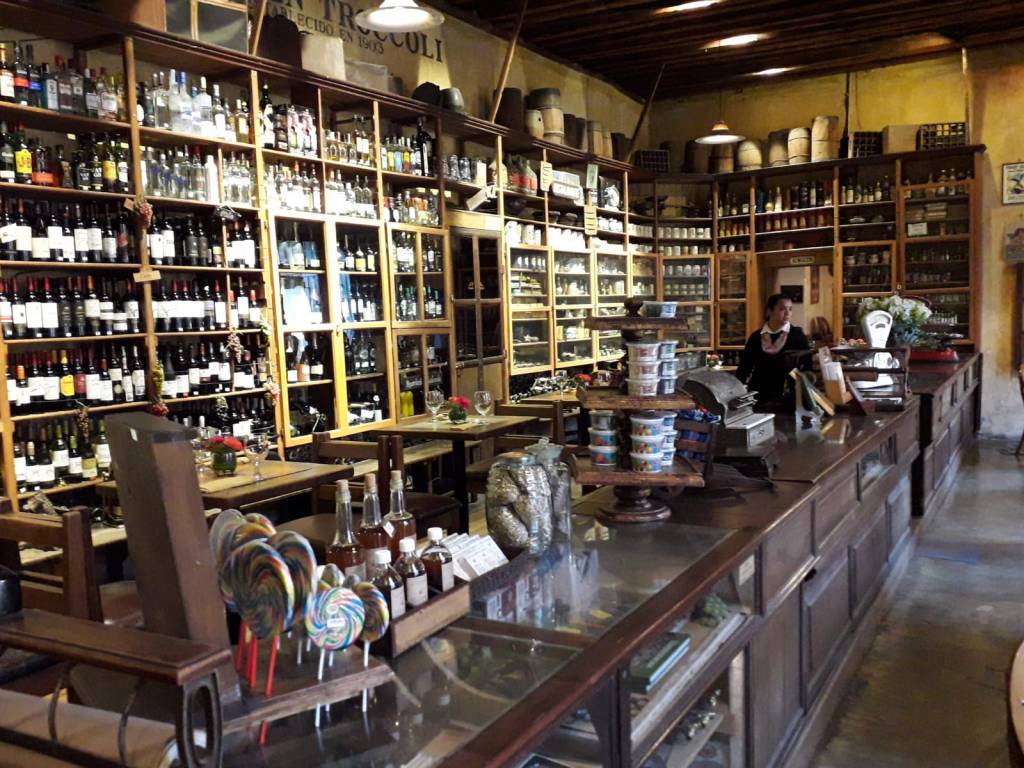
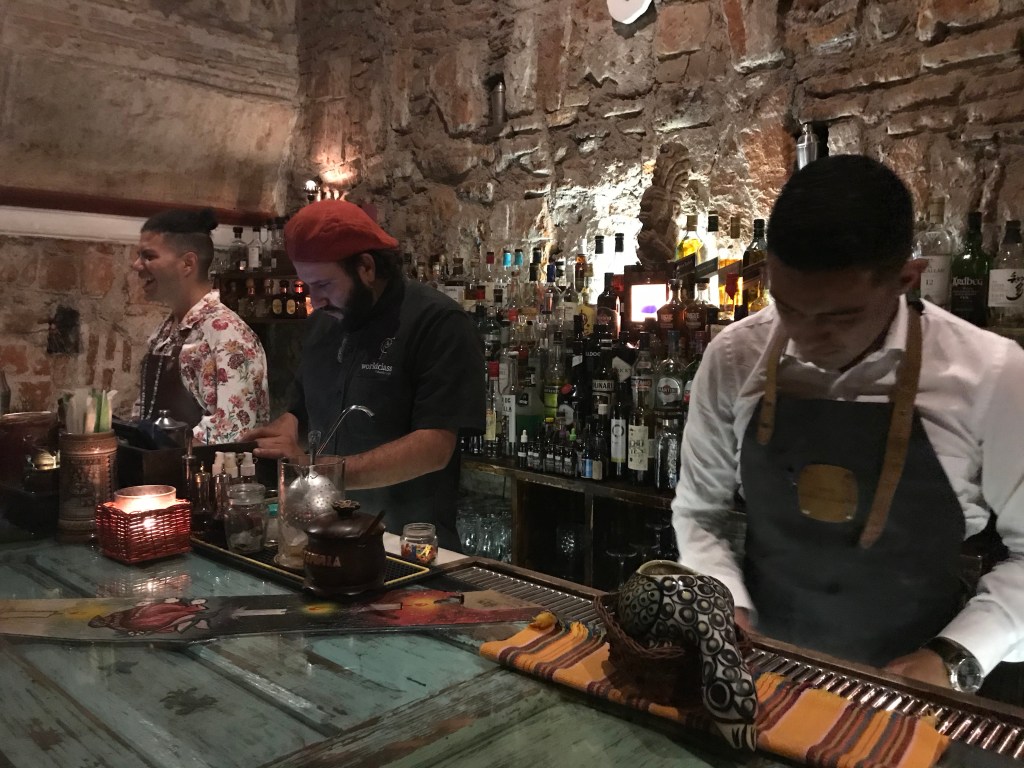
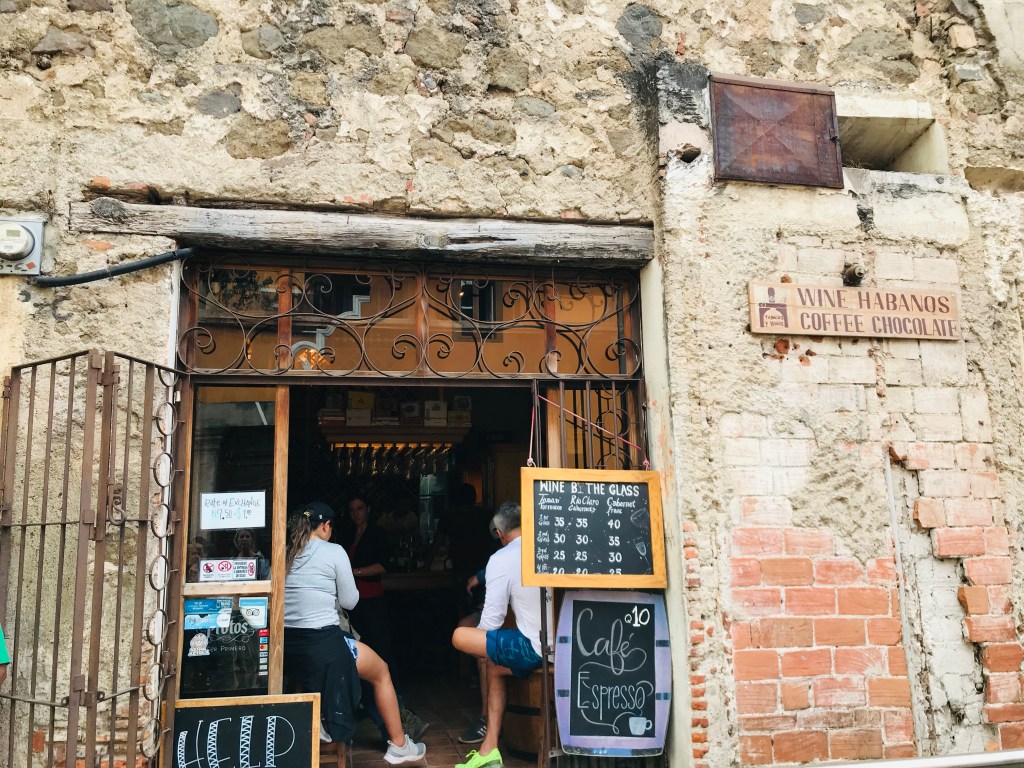
Then there are the bars … so many to get round and so little time! In one of our more sensible moments we decided to restrict ourselves to one night out in the week but then we do go a little crazy on Friday and Saturday nights (I know most of you reading this back at home will find that difficult to believe). It is hard not to be overwhelmed by the amount of cool places to drink – from rooftop bars with stunning views of the city to whisky dens to wine bars where every glass of wine you buy is cheaper than the last. Every time we try a new place we claim it as our favourite but I have picked 3 that particularly stick in our minds. Cafe No Se, renowned as the first mezcal bar outside of Mexico, a shadowy, candlelit bar that plays live music and is perfect for a bit of surreptitious people-watching. The Antiguan Brewing Company is where you can drink a couple of locally brewed craft beers on the terrace then wander downstairs, through a secret door, to an amazing cocktail bar where the equally amazing bartenders create your own personalised cocktail. Then there is the elegant Almacen Troccoli which has a classy Italian ambience where you can sip wine at the beautiful 100 year old bar or at a window seat watching the world go by. All different but all with that ‘special something’ and, who knows, it is Saturday today and with more bars to seek out we are sure to find yet another favourite.

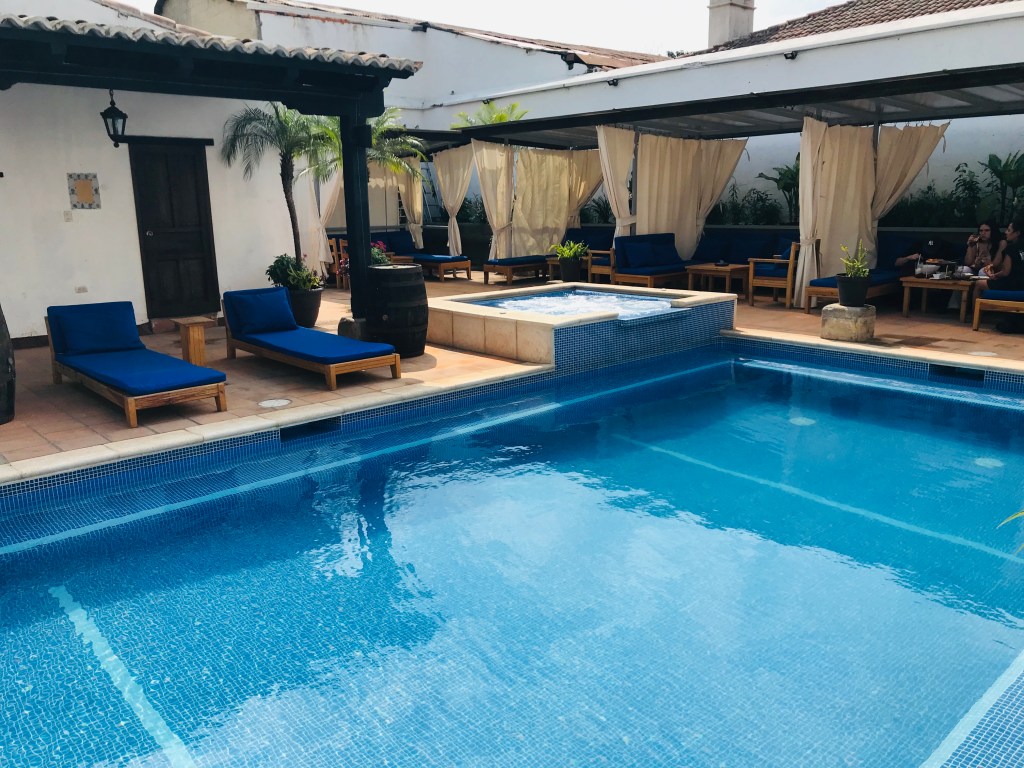
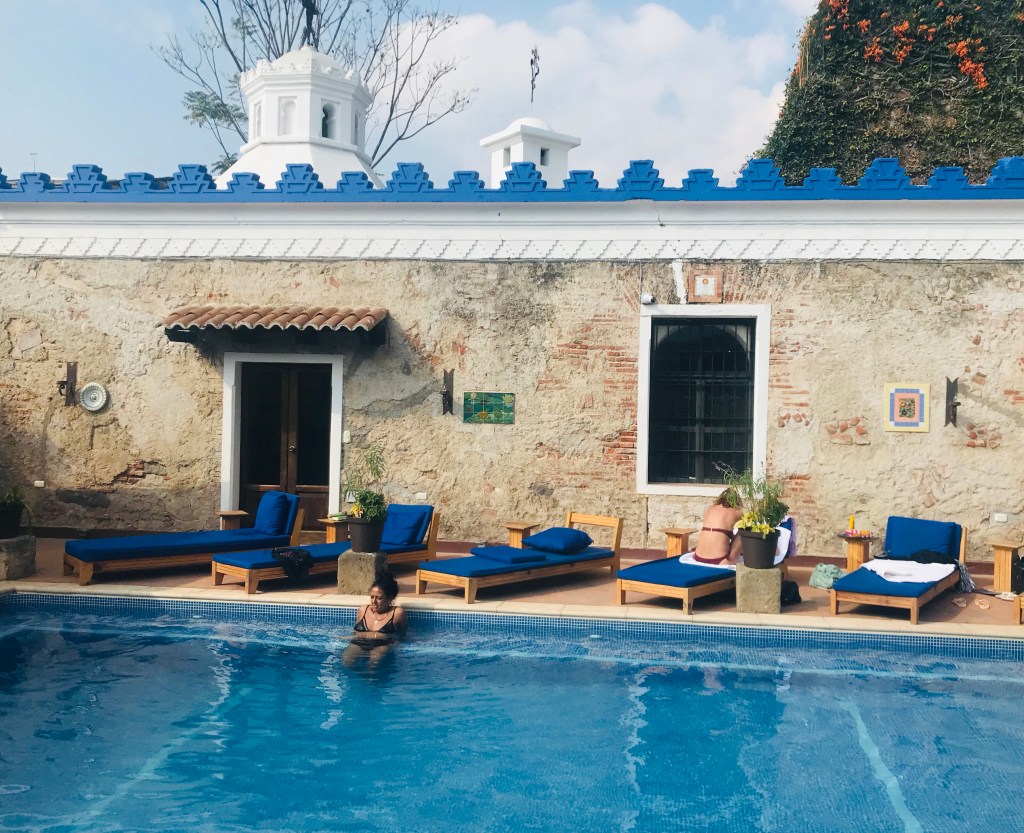
Apart from working, shopping, eating and drinking what else is there to do in Antigua? Well, as you would expect, Jan joined a ‘full on’ gym within hours of arrival and has been spinning, circuiting and working out. However, so as not to be put to shame, Karen and I have been going to a yoga/dance studio called Beat where we have attended classes in yoga and yoga dance (don’t ask). It is so friendly, the classes are all held in English and everyone treats us as though we are their life long friends. For that supreme chill out experience we go to Blu an urban oasis in the centre of the town with a pool, sun-beds and, of course, cocktails. What we haven’t done, but is very popular here, is attend a salsa class but judging by Jan’s reaction when Karen and I showed her some of our yoga dance moves we will probably give that one a miss. Antigua is also one of the most popular places in the world to study Spanish due to affordable prices and the easy local accent. There are Spanish Language Schools throughout the city – but we are managing to survive with ‘Google Translate’ and as long as we can ask for “tres cervezas por favor” we are happy.

So that is a whistle stop tour of Antigua, an atmospheric city that has surprised us all with its incredible buildings and vistas, its buzzing nightlife and its wealth of culture. If it isn’t already on your bucket list then add it now and while you are here why not do a spot of volunteering at ‘The School of Hope’ – you won’t regret it, we certainly haven’t.

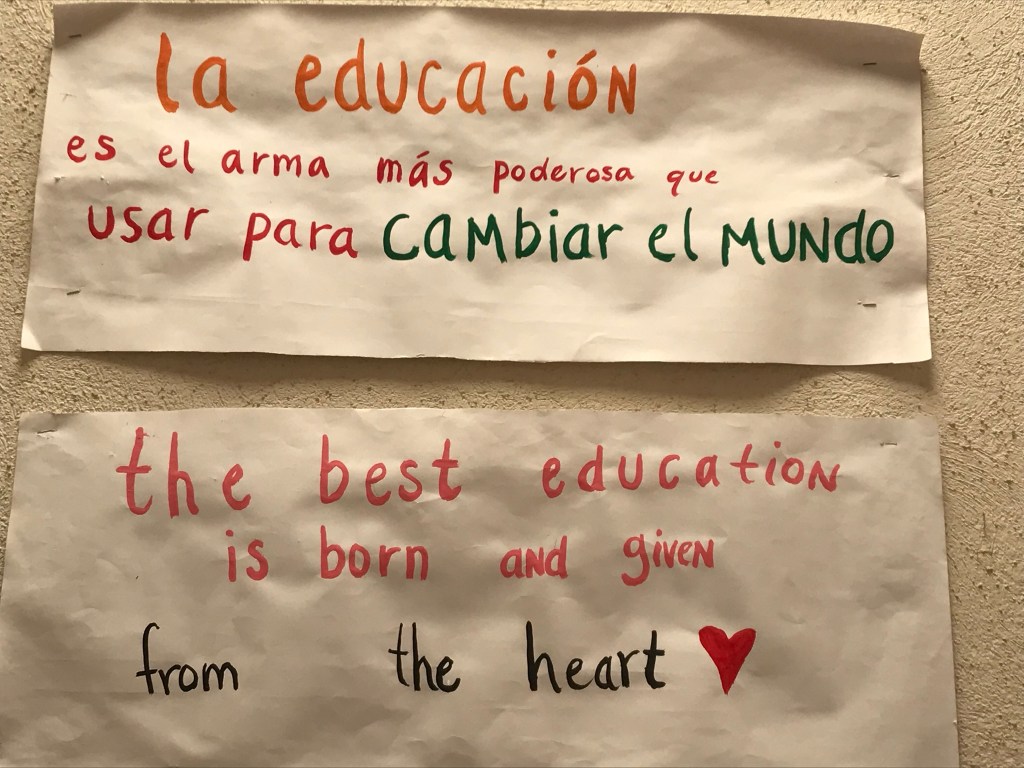
“Hugs, Happiness and above all Hope”.

We have been in Guatemala 9 days now and there is so much to write about – the friendly Guatemalan people, the stunning town of Antigua where we are living, the spectacular volcanoes we can see from every street corner, the cool bars and restaurants that we have frequented (and the many we have yet to visit) but these will all have to wait until future posts. Today is about telling you a little bit about ‘The School of Hope’ and a few of our experiences after our first week as volunteers.

The ‘School of Hope’ is situated in Jocotenango ( pronounced“Hoco-ten-ango”) a town which, although very close to the picturesque and vibrant town of Antigua, seems a million miles away in so many respects. The poorer parts of the town of Jocotenango and its suburbs have little more than shanty dwellings and overcrowded housing. Alcoholism, domestic abuse and other social problems create immense difficulties for the families living there. Many of the children at the school come from the precarious community of Vista Hermosa, where homes barely cling to the side of a mountain. Almost 400 squatter families live in this community which lies open to the elements and lacks even the most basic infrastructure found in a normal town. In the rainy season residents of Vista Hermosa can find themselves trapped between torrents of rushing water, mud, rubbish and falling rocks and, in some cases, homes are washed away.

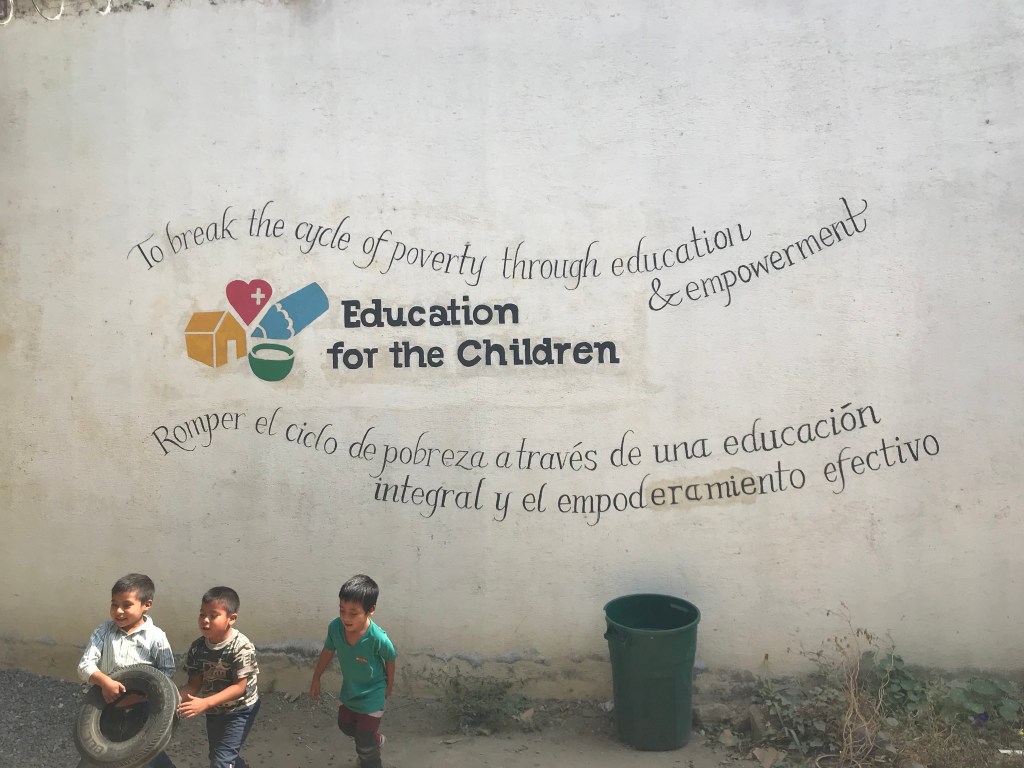
In these extreme cases of poverty there is no way that parents can afford to send their children to the state run schools in Guatemala. To access state education, parents have to provide uniform, transport, food and books before a child can be admitted into any school, many just cannot afford to fund these things and without ‘The School of Hope’ hundreds would never receive any formal schooling. The school is run by the charity ‘Education for the Children’ and provides free education to all those in Jocotenango who are unable to access the state system. EFTC is the only charity in this region to offer completely free educational scholarships to those who need it, from kindergarten all the way through to graduation from University.

Knowing the backgrounds of many of the young people attending the school we had no idea what to expect and, it is fair to say, we were all a little nervous when we reported for work at 8.00am last Monday. We need not have worried because at the end of the week the 3 of us all agreed that this school is truly a unique place.

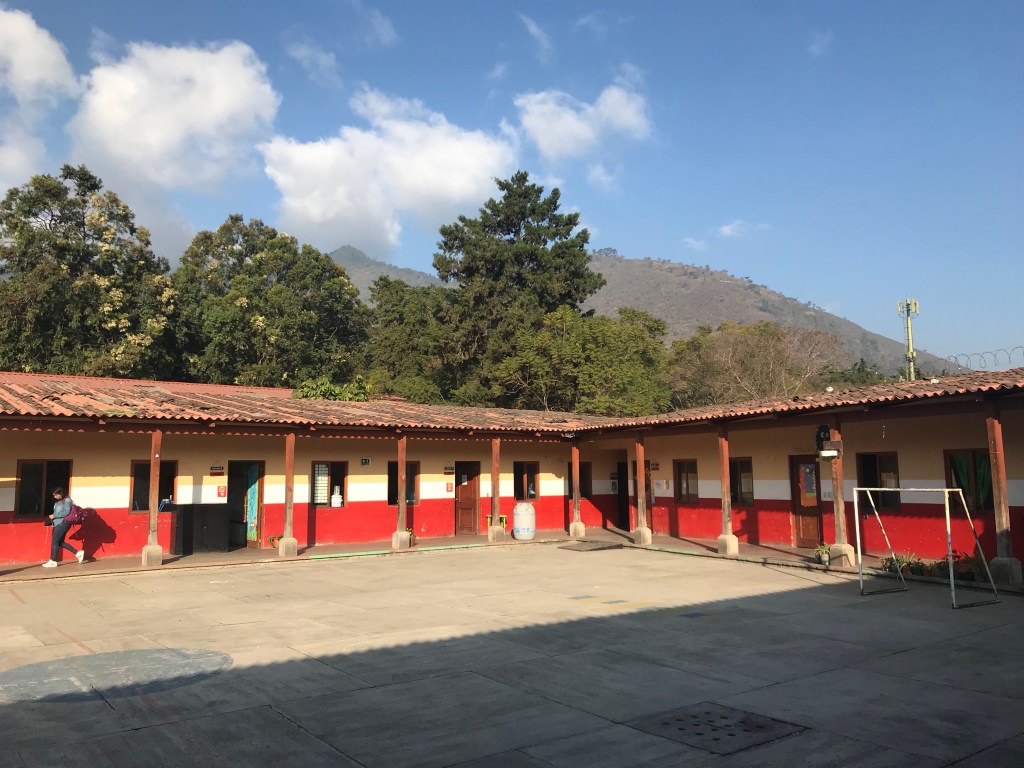
We were met by Kellen and, along with another volunteer from Austria, we were given our induction. We had a tour of the school and saw the 20 different classrooms, the spotless kitchen (I will talk about the excellent nutritional package in a later post), the playground/recreation area, ‘The Garden of Hope’ and a walk around part of the coffee plantation, Finca La Azotea, in which the school is located.

After the induction came the moment of truth – we were sent our separate ways and into the classes where we are to be classroom assistants for the next 3 weeks. Karen is with the Segunda Class (8/9 year olds), Jan is with the Primera Class (6/7 year olds) and I am with the Prepa Class (5 year olds). As soon as I walked into the classroom I knew I was going to love it – 21 adorable faces looked up at me and said “Good Morning” in perfect English. The top three learning priorities in school are computer skills, English and extra-curricular activities so each class, throughout the school, has half a week of lessons in English and half a week of lessons in Spanish. Although the official language of Guatemala is Spanish there are also twenty-four distinct indigenous languages spoken in various parts of the country. One of the difficulties the school faces is that a few parents only speak ‘Kaqchiquel’ an indigenous Mayan language so communication regarding their children can sometimes cause problems. However, the school is also positively trying to embrace the importance of these particular students maintaining their roots and offers some lessons in ‘Kaqchiquel’.

There are 2 classes per school year, and for the first 3 years of school one class has lessons in English – Monday, Wednesday and Friday morning and the other class has English the remaining days of the week. The good news is this means that the 3 of us are always in the English classes as our Spanish is almost non existent. In my year there is ‘Prepa A’ and ‘Prepa B’ with 42 special little people for me to get know and all of them are learning to speak English from the age of 5 – how fantastic is that?

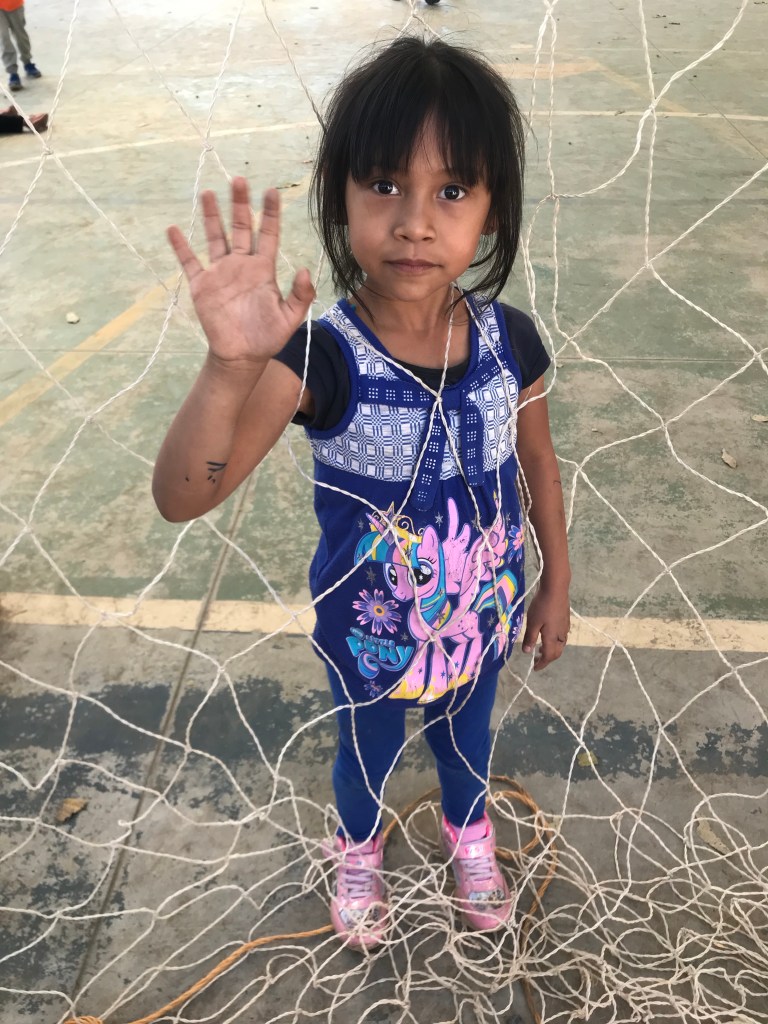
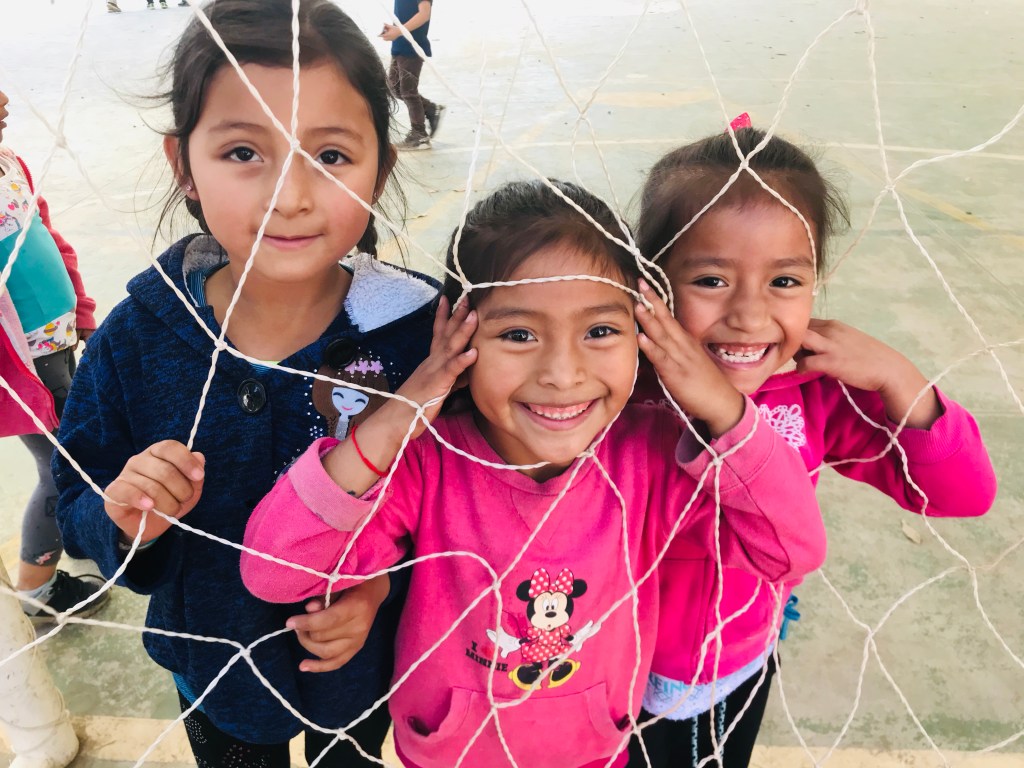
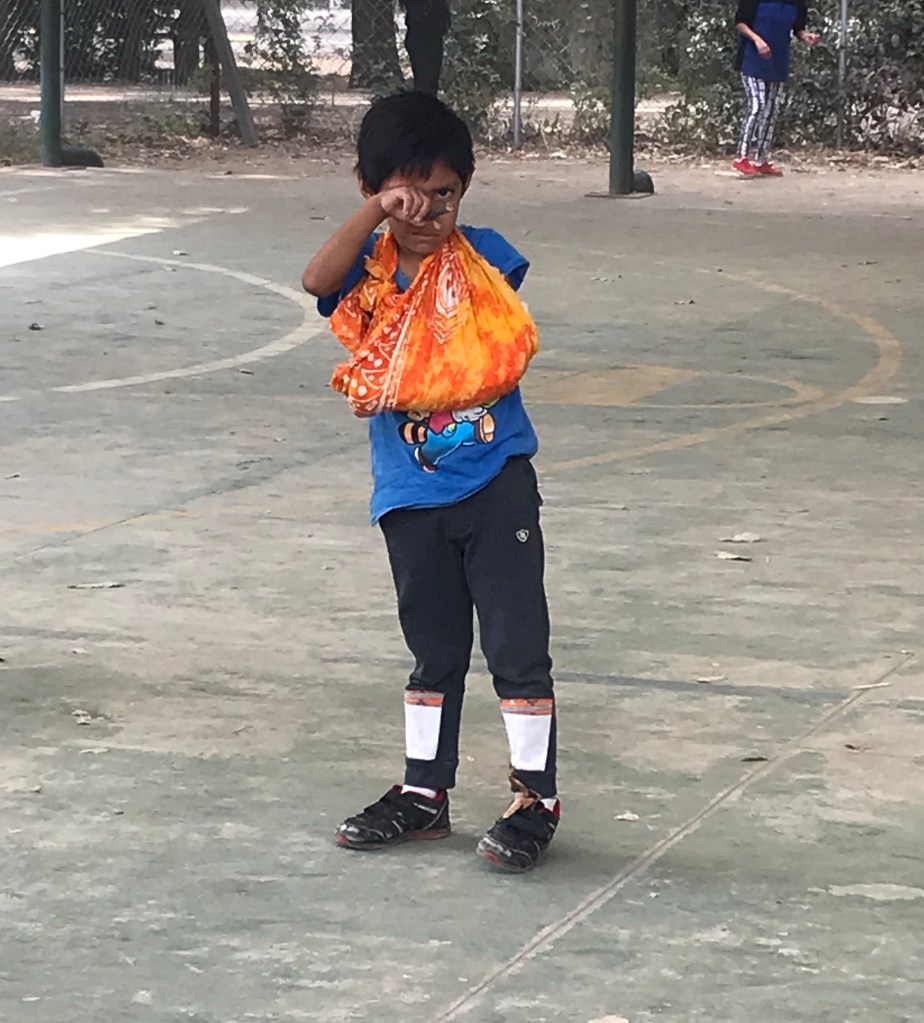
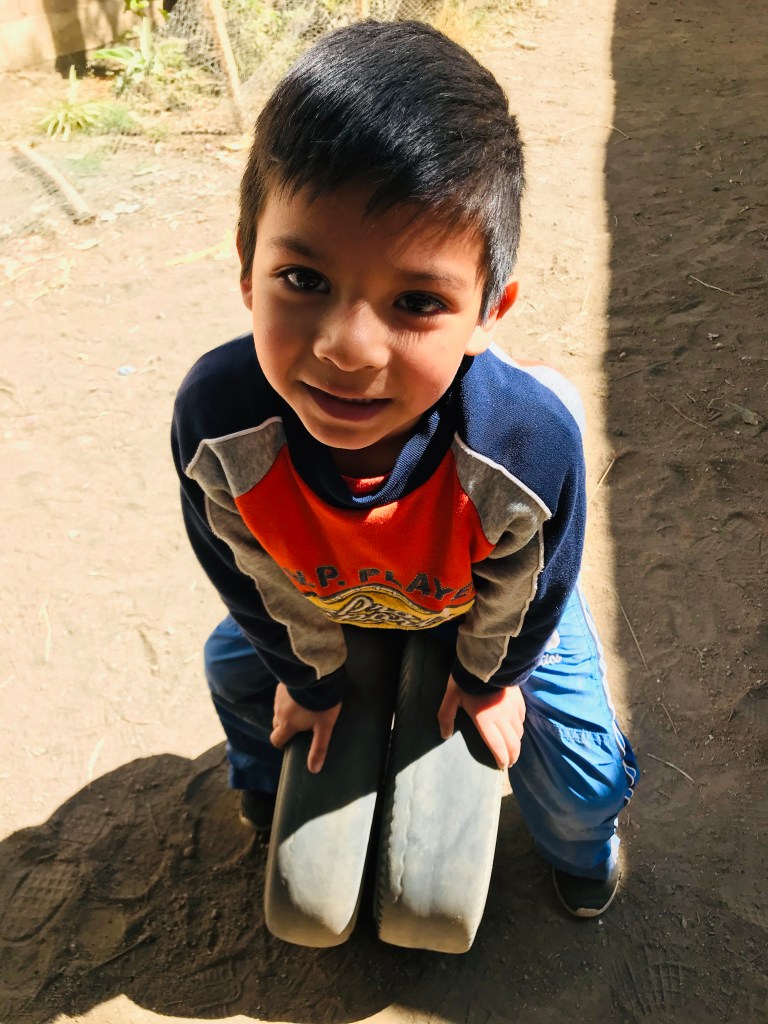
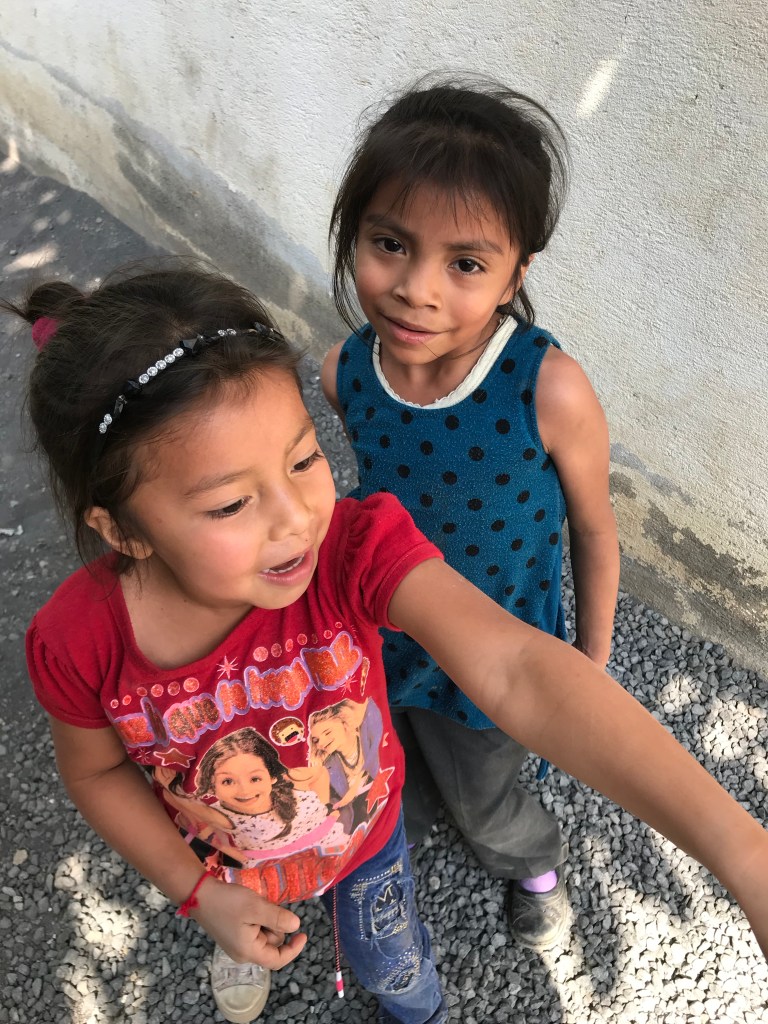
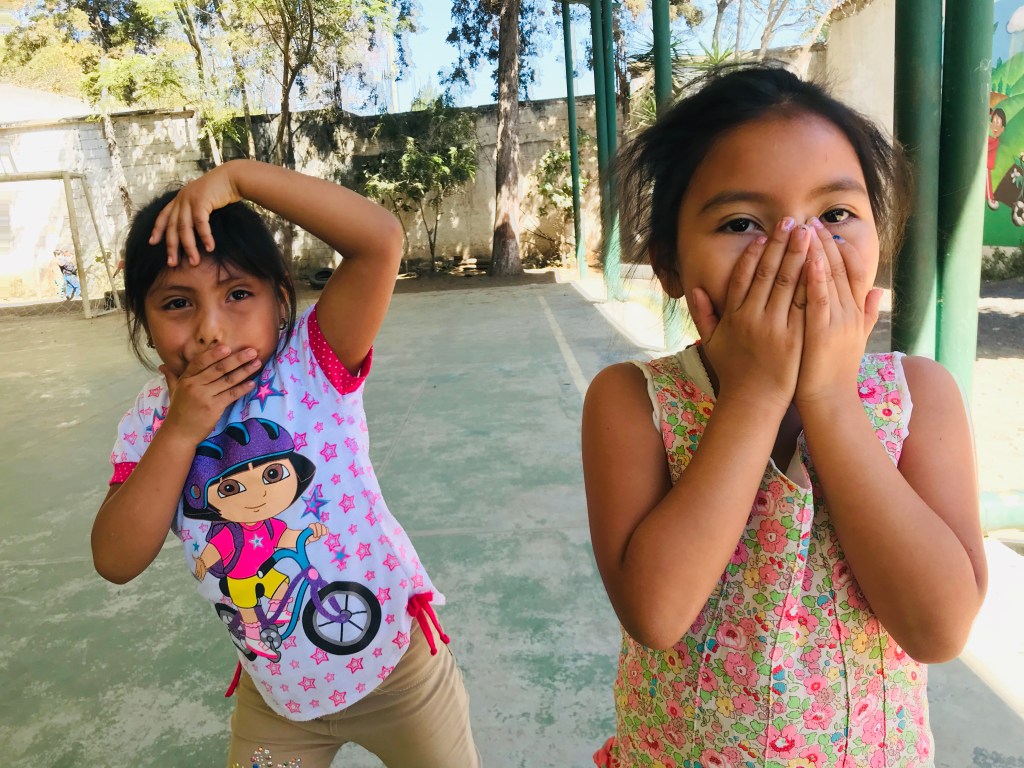
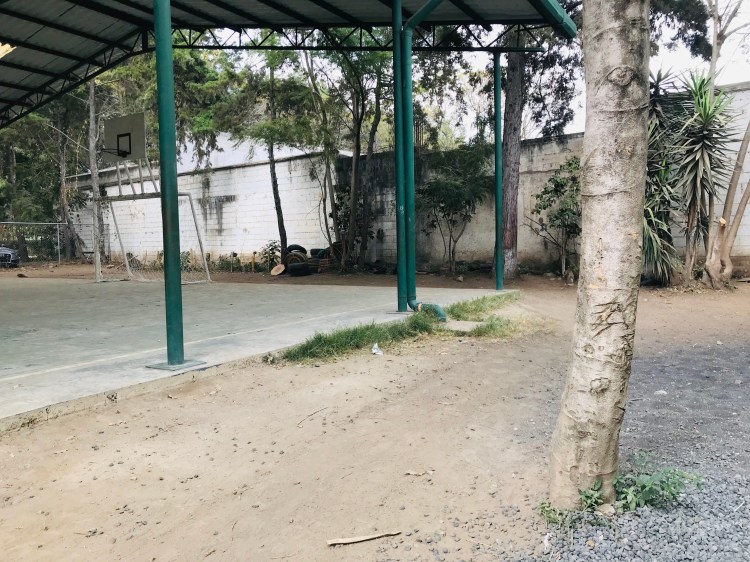
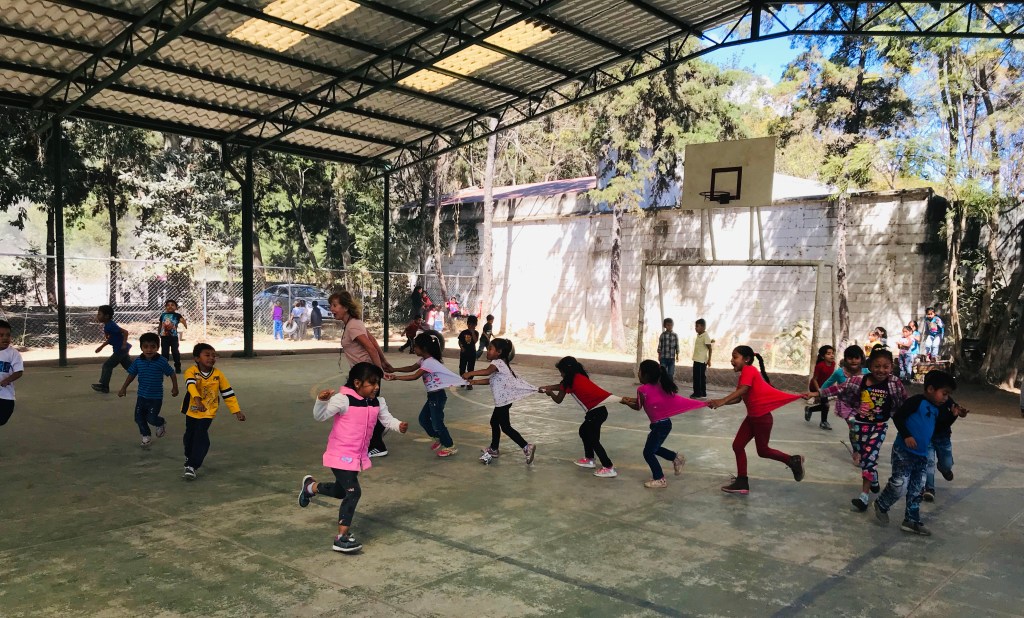
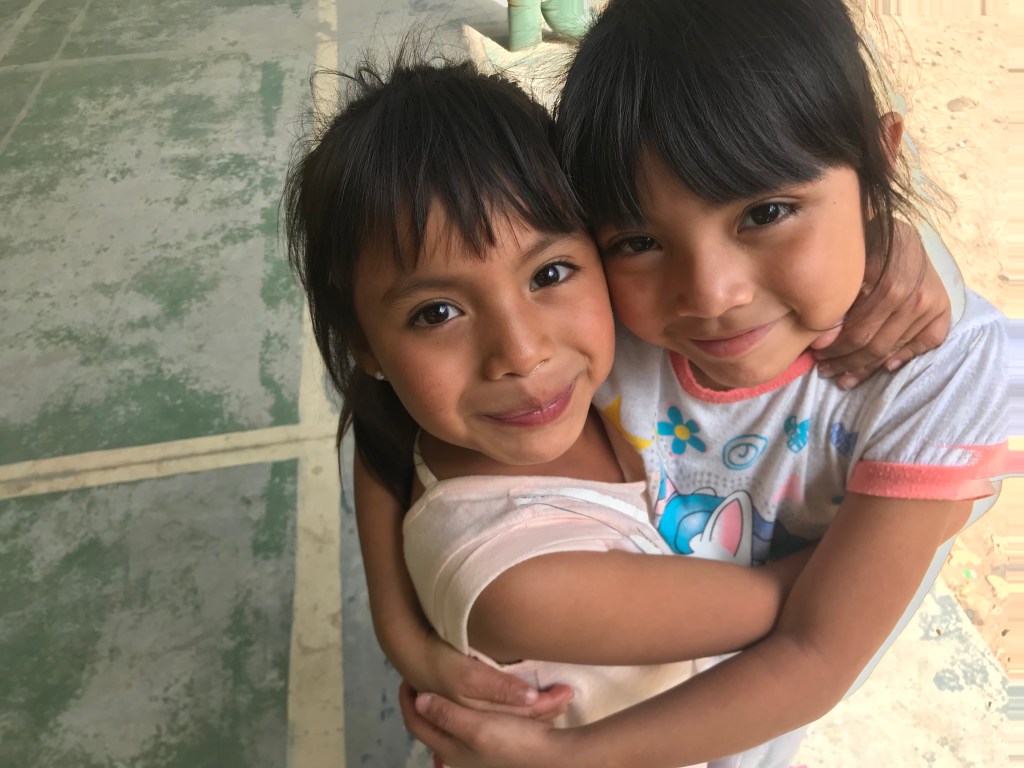
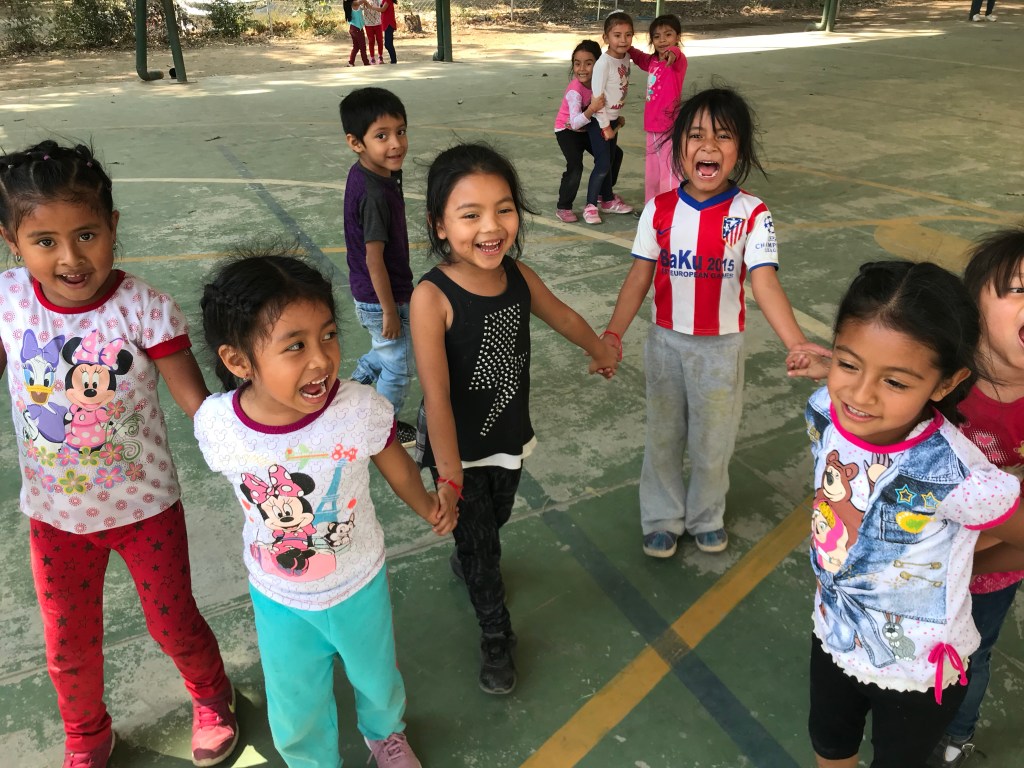
Outside there is a multi use recreational area – it is the place for PE lessons, it is the football pitch and it is the playground where, I am sure, lifelong friendships are made. It is where, at break time, you hear constant laughter wether it be from the smallest children running around playing ‘tig’ or the older students (girls and boys) entering into a fast and furious game of football. It is a dusty area with nothing much but a couple of goal posts and a few old tyres for entertainment but it is a place of happiness and hugs. We have all lost count of the number of hugs we have had this week. It is a place where everyone smiles and no-one cries – not even when they fall over – they just jump up, dust themselves down and run off with cheeky grins on their faces.

So apart from getting lots of hugs what else have we been doing? “Miss Karen”, as she is fondly referred to, is listening to students read as well as marking tests – almost a proper English teacher. Jan is singing and, as you would expect, dancing too. She is paying particular attention to the slower learners and is giving them one to one help when they are struggling in class. You will be pleased to hear that I am not singing but I have done a lot of drawing. Because resources are so limited and visual aids in short supply I have been drawing a picture for every letter of the alphabet. These are now on display in the classroom – I certainly won’t win The Turner Prize but I am getting a dab hand at drawing ants, balloons, cats, dogs etc… The children in my class have only been learning English for 3 weeks but many of them can already count to ten; say and write red, blue, yellow and know a number of key words beginning with A, S and T – the letters we have been focussing on this week. They have also learnt to say “thank you” when you hand them anything from a spoon to eat their lunch with to a pair of scissors to cut out shapes with. Quite amazing when you think English is their second language and they are only 5.

There are some sad stories too. There is the little girl in Jan’s class who split the back of her trousers and was acutely embarrassed. Jan took her to the school office and managed to find an old pair of leggings amongst a very small supply of spare clothes. Then there were the girls and boys in my class who didn’t have anything to bring from home when parents were asked to send a doll or car with their child so we could discuss the importance of sharing and we could learn words like “play” and “toys”. Again in class there were only a couple of ‘stand-in’ dolls and cars. Every single thing and every single person in the school is funded by donations so clearly spare toys and clothing are way down the list of priorities when there are teachers, a nurse, books, paper, computers, class room materials, food and many, many other things to pay for.

The week was busy, we came home shattered, we were in bed by 9.30pm most nights but it is all worth it when the next day you get a ‘high five’ or a “hola” or most importantly that special hug. Although we had all thoroughly enjoyed our first week – that Friday night feeling was great too – a G and T on our terrace followed by a night out in beautiful Antigua with a plethora of bars and restaurants for us to choose from.

So it’s Sunday night again, the alarm is set for 6.30am and we are raring to go for another week. The thing I am most looking forward to is seeing their happy faces – despite the desperate living conditions many of the youngsters live in, they all arrive on time (some walk for over an hour to get to school) and they are always beaming from ear to ear. There is most definitely hope for all their futures.

Many thank-you’s.

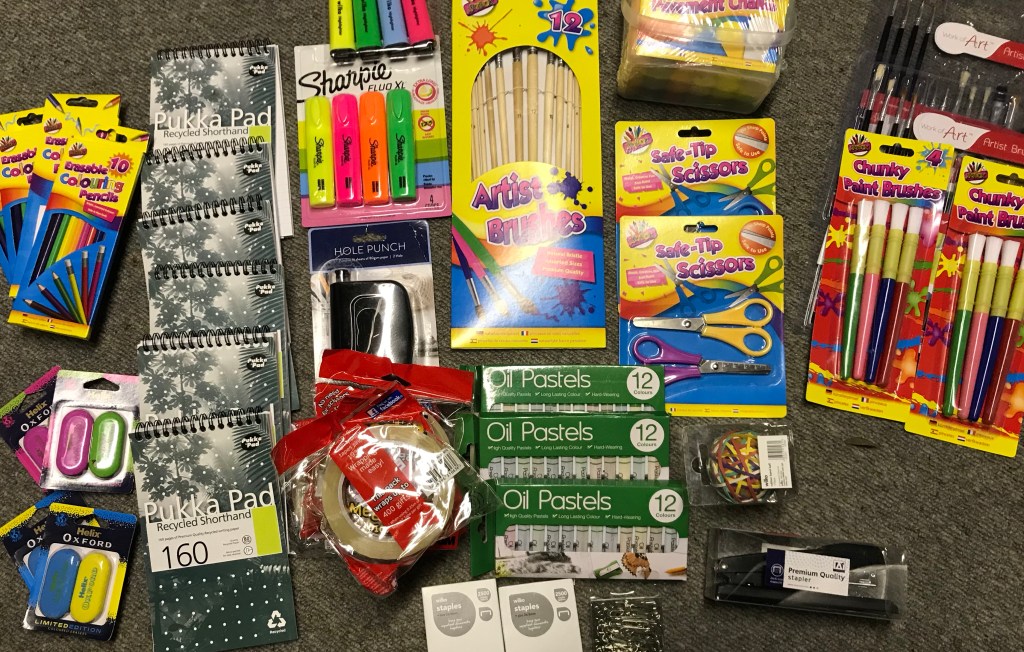
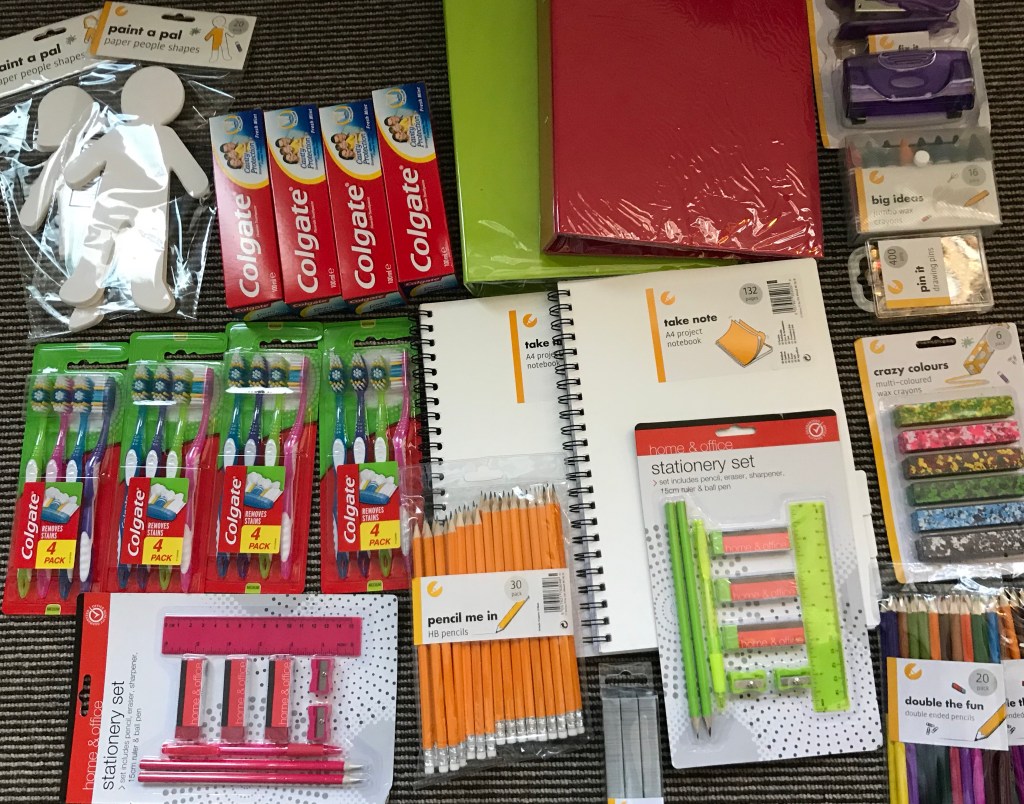
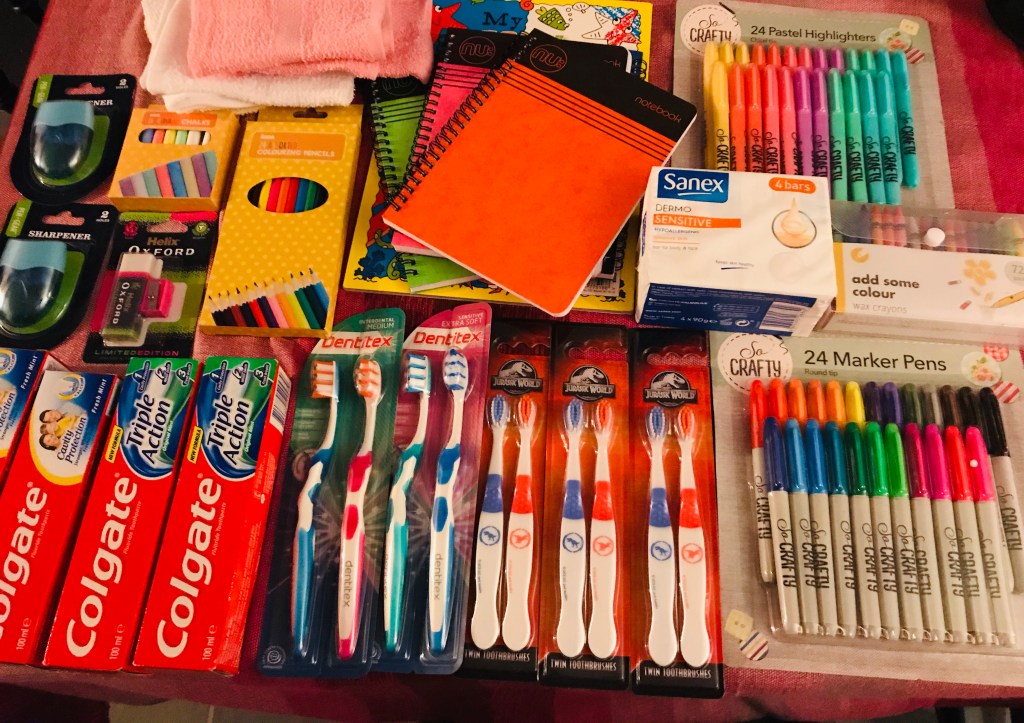
We have arrived safely in beautiful Antigua where the sun is shining and the sky is blue but, before writing about Guatemala, we need to thank a lot of people for the amazing donations we have received for the ‘School of Hope’. When we sent out an email, back in October, asking if people could buy just one thing from a list of much needed items which Kellen, Visitor and Volunteer Coordinator at EFTC, had sent us, we never imagined how generous our friends, family and businesses would be. Every week people were dropping by with bags/boxes of things they had bought for us to take. As our departure drew nearer more and more donations arrived – anonymous parcels on the doorstep, Amazon were delivering packages from friends and family and an extra special thank you to Andy C for his 4 huge boxes of stationery items … fantastic. From toothpaste and toothbrushes to pencils and pens to glitter and face paints … we have got it all and I am sure the staff and children in Jocotenango will make use of every single thing that has so generously been donated.

A very BIG thank you to Lynne (S), Lynne (B), Shaz and Denise who gave us very generous cash donations to fund the 2 extra suitcases on the plane.

We mustn’t forget to thank Juliet for providing the three of us with an excellent dinner, B and B (plus wine!) the night before our flight and then getting up at at the crack of dawn to chauffeur us to Heathrow for our 11.00am flight to Guatemala City via Atlanta. I can highly recommend her services.

On arrival at the ‘Delta Airlines’ check-in desk we were so impressed with the staff who could not have been more accommodating. When we told Greg, who was checking us in, that 2 of the cases were filled with donations he immediately contacted Mandy, his supervisor, and they waived the £72 per item charge for each of the 2 additional suitcases. What a fantastic start to our trip – that overwhelming gesture means that we can use the cash donations to pay for the shipping of all the parcels we had to leave behind. No matter how hard we tried we could not fit everything into the 2 suitcases and although we were gutted there was no way we could squeeze in another crayon, stapler or bar of soap. Thank you Delta Airlines and especially Greg and Mandy – your generosity means so much to so many.

Thank you to Kellen, a friendly and welcoming face who was there to meet us when we arrived at our accommodation in Antigua (pronounced “anteegwa” as opposed to the Caribbean island of Antigua which is pronounced “anteega”). Kellen helped us get our bearings and told us the important things about our new surroundings, recommended restaurants and bars and most importantly how to get to school on Monday.

Finally thank you to Michelle and all the other EFTC staff who have helped and advised us along the way – we are looking forward to the alarm going off at 7.00am on Monday morning when we start “work” – a word that I have certainly become unfamiliar with over the last few years.

How it all started.

Back in 2015 when I became a ‘lady of leisure’ I always hoped I would be able to undertake some type of voluntary work. I chatted to various friends about different opportunities … some wondered why I couldn’t just work in a local charity shop while others were keen to explore more adventurous options with me. It was early in 2019 while Jan and I were chatting with our friend Shaz that the seed of working in Guatemala was sown. Shaz has a friend, Michelle, who is Chair of the Board of Trustees for ‘Education for the Children’ an international NGO that works in partnership with disadvantaged families, children and young adults at La Escuela de Esperanza (The School of Hope) in Jocotenango, near Antigua, Guatemala. The idea immediately appealed to me having had many rewarding experiences, during the last 15 years of my career, working with disadvantaged young people in Sheffield.

Shaz arranged for us to meet with Michelle and after a couple of hours listening to her stories, looking at her photographs and sharing her experiences of working in Jocotenango both Jan and I knew we had to go. We came home full of enthusiasm and after chatting to Karen she decided that she too would like to join us. A further meeting with Michelle and Boo at the EFTC UK Headquarters in West Bridgford and any concerns we had were put to bed and dates were firmed up.

Initially not everyone was quite as positive as us … “Isn’t Guatemala dangerous?”, “Are you really going to make a difference? ” My response to this first question is “Yes Guatemala can be dangerous but so too can London and many other parts of the UK”. In 2019 there were 79 fatal stabbings in London. Almost 60 percent of the deaths in the capital were due to knife crime. Eleven people were shot dead in London in 2019. Four were run over, three were burned alive, five were strangled and 25 died of head injuries either in a fight or having been attacked. So ‘yes’ Guatemala may be dangerous in parts, but hopefully not where we are going, and ‘yes’ we are aware that we need to be vigilant in certain places but we need to put things into perspective and remind ourselves what is happening on our own doorstep.

I have been fortunate enough to travel to some amazing places across the world including Vietnam, Cambodia, Malaysia, Sri Lanka, Thailand, Mexico and The Caribbean but the only time I have had any problems with theft is much closer to home, and all in Spain. Twice here I have had money stolen and twice had to fend off potential pick pockets. We often think of all these places, in far flung lands, being unsafe but again we need to look at countries which are only a couple of hours flying time away from the UK. Fortunately I have two travelling companions who are extremely prudent and cautious and who will, I am sure, reign in my sometimes ‘cavalier’ outlook. We have all purchased body wallets that we can keep our money, cards and phones in – these are worn underneath your clothes and cannot be seen. https://go.travel/uk/security/money-holders/body-pocket

Secondly “Are we really going to make a difference? ” My response to that is overwhelmingly “yes”. Obviously in 3 weeks we appreciate that we will not ‘change the world’ and as short term volunteers we will not actually be teaching the children but acting as classroom assistants, mostly in English lessons. Hopefully we will be able to sit with individuals/small groups and help them with writing/speaking English words. IT is more or less a ‘universal language’ so I am hoping we can add value in IT lessons as well. Michelle tells us that without English and IT skills the children of Jocotenango will probably end up selling tortillas on the street. The city of Antigua holds some of the biggest tourist attractions in Guatemala with lots of job opportunities in leisure and tourism for those who can speak English and who have computer skills. If we only help one child learn a few new words that will one day lead to gameful employment then our trip will have been worthwhile.

Please follow this link to learn more about how volunteers get involved at “The School of Hope” https://www.eftc.org.uk/en/get-involved/volunteer-in-guatemala

So now here I am on Sunday night with only 2 days left to shop, pack, have my hair done and a million other things still to cross off my list. The messages from Karen and Jan are coming at regular intervals reminding one another of things we may have forgotten… Jan was horrified I had missed off TCP and Karen, as ever the ‘sensible one’ (sometimes), added head torches to the list. At the moment I am feeling both apprehensive and excited – but am I glad I am embarking on this adventure? “You bet I am”.